
Killingly, CT — A catalog
Eight named villages, one town hall, one excavation crew that knows them apart.
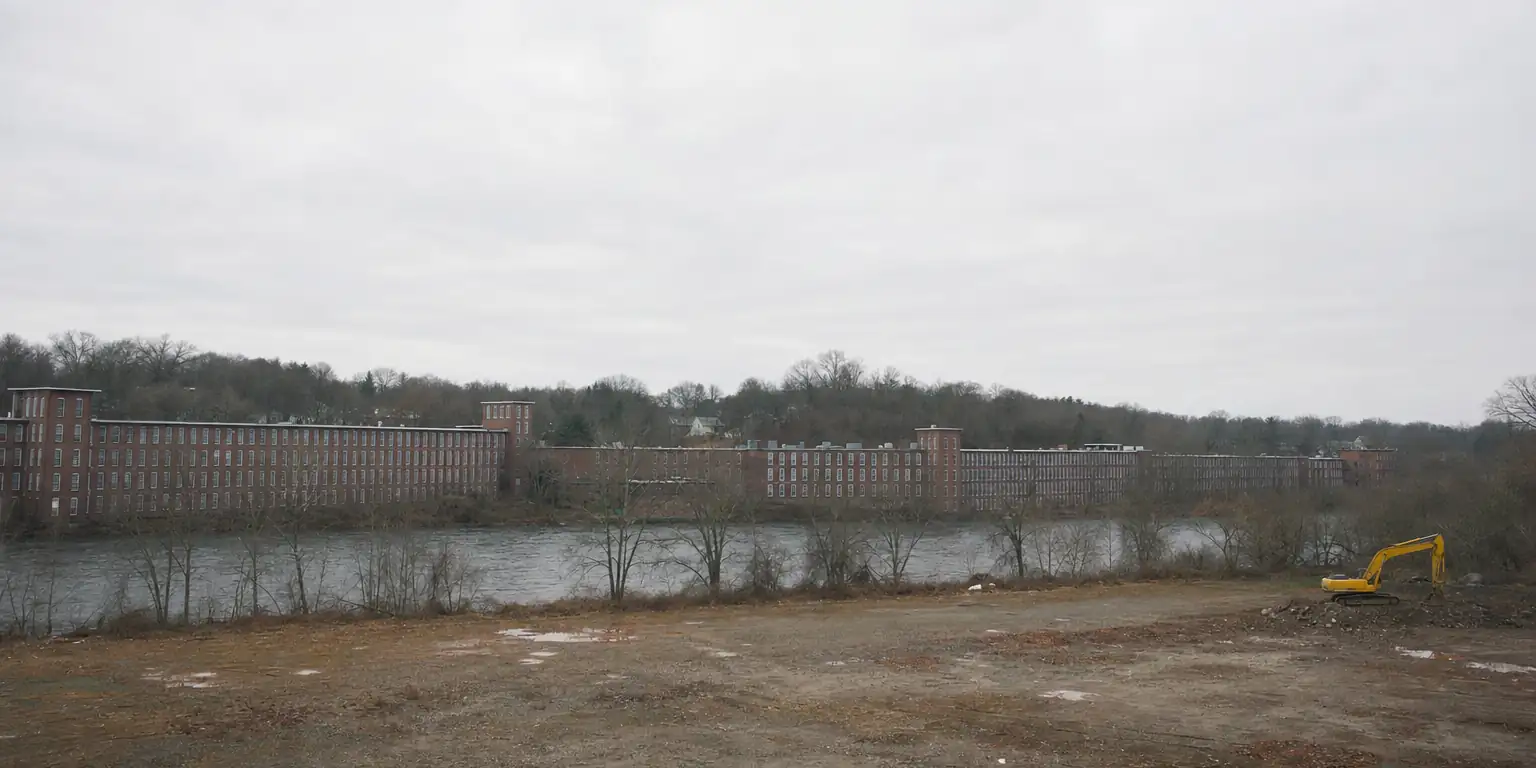
Killingly is one of the most-fragmented towns in eastern Connecticut. The borough of Danielson runs the downtown utilities. Seven other named villages each have their own mill history, soil, and job mix. We work all of them.
§01
Borough · town center
Danielson
Dense 19th-century borough on the Quinebaug. Mill-era housing on tight lots, brick downtown, public water and sewer through the borough utilities. Foundation repair, sewer-lateral replacement, and tight-access work dominate. The Killingly Town Hall is here.
Job mix
- ·Tight-lot foundations
- ·Lateral / supply trenching
- ·Mill-era basement work
§02
Mill village · Five Mile River
Dayville
Built around the Sabin L. Sayles mill on the Five Mile. Mixed mill-era and mid-20th-century stock, smaller lots than the rural villages but larger than Danielson. Common: foundation work, drainage on falling lots that drop to the Five Mile, OWTS repair on the older streets.
Job mix
- ·Drainage to Five Mile River
- ·Septic repair on aging systems
- ·Foundation work
§03
Mill village · Five Mile River
Ballouville
Smaller and quieter than Dayville, half a mile north on the same river. Mostly residential mill-era housing now. Septic-replacement and drainage work are the regulars; less of the tight-borough utility work that defines Danielson.
Job mix
- ·NDDH septic replacement
- ·Curtain drains
- ·Driveway grade repair
§04
Mill village · upper Five Mile
Attawaugan
Small north-county village. Job mix here is mostly older systems being repaired or replaced — septic that ran past its design life, well-line trenching, drainage retrofits on lots that have settled.
Job mix
- ·Septic replacement
- ·Well-line trenching
- ·Settled-lot regrading
§05
Hamlet · Quinebaug-adjacent
Rogers
Crossroads village on the south side. Light residential, agricultural perimeter. Foundation work, septic repair, and drainage on the uplands above the Quinebaug.
Job mix
- ·Foundation work
- ·Septic repair
- ·Upland drainage
§06
Rural village · RI line
East Killingly
Up against the Rhode Island border. Larger lots, full rural-village character — no public sewer or water on most streets, glacial till uplands, occasional ledge. OWTS, wells, and rural driveways are the main calls.
Job mix
- ·OWTS install + repair
- ·Rural driveways
- ·Land clearing
§07
Rural village · Plainfield line
South Killingly
South-end residential / agricultural. Mostly NDDH septic territory. Standard rural CT excavation — foundations, septic, drainage on the larger lots, occasional drainage work on the Quinebaug-adjacent parcels.
Job mix
- ·Standard rural foundation
- ·NDDH septic
- ·Quinebaug-edge drainage
§08
Hamlet · west side
Williamsville
The smallest of the named villages, north-west toward Pomfret. Almost entirely residential, low density. Septic, wells, foundations, and the kind of slow-paced rural work that doesn’t make the front page but keeps a town running.
Job mix
- ·Wells + septic
- ·Foundation work
- ·Driveway regrading
Permitting note
One health district, two utility realities.
All eight Killingly villages permit septic through the Northeast District Department of Health (NDDH) — the same regional district that covers Sterling, Plainfield, Brooklyn, and Putnam. Engineer-designed OWTS, CT-licensed installer, NDDH approval before construction.
Public water and sewer end at the Danielson borough line. Cross out of Danielson and you’re on a private well and a leach field, even on streets that look like they should have town service. We confirm utility availability lot-by-lot before we quote.
Excavation services we run in Killingly
Eight villages, one crew, every scope below.
Septic & sewer
Foundations & structure
Drainage & water
Site, clearing & grading
Driveways, utilities & access
Frequently asked — Killingly
What we get asked before excavating in Danielson and the mill villages.
- Which utility covers Danielson — KFD or NPU?
- Danielson Borough has its own utility coverage through Killingly Public Works for sewer and water in the downtown core. Outside Danielson, most of Killingly is on private well and septic — Connecticut Water serves portions of Attawaugan and Rogers. We check service-area maps before quoting any below-grade work that touches utility laterals.
- What's typical for Attawaugan and Rogers mill-village lots?
- Smaller lots with old rubble-stone foundations and laterals that are 80+ years old. Foundation underpinning, lateral replacement, and tight-access excavation are the steady diet. Equipment selection matters here — mini-excavators get in where standard machines won't.
- Does the Quinebaug River cross Killingly?
- Yes, on the western edge near the Plainfield line. Lots within the FEMA-mapped floodplain need elevation certificates and base flood elevation compliance. The Killingly Inland Wetlands Commission reviews anything within 100 feet of regulated wetlands; we coordinate the review before any river-adjacent dig.
- Is rural Killingly mostly septic or sewer?
- Mostly septic outside the boroughs. NDDH (Northeast District Department of Health) handles the OWTS permit, design review, and final inspection. Rural-acre lots typically have room for full-trench systems with proper separation from the well; smaller in-village lots often need engineered designs.
- Can you do commercial site prep along Route 6?
- Yes. Route 6 (Hartford Pike) runs through Killingly's commercial spine. We've done pad prep, stormwater retrofits, and utility trenching along the corridor — coordinated with CT DOT for any work in the right-of-way and with Killingly Building/P&Z for everything off it.
Tell us which village. We’ll show up knowing it.
Also in KillinglyUnderground utilities Demolition