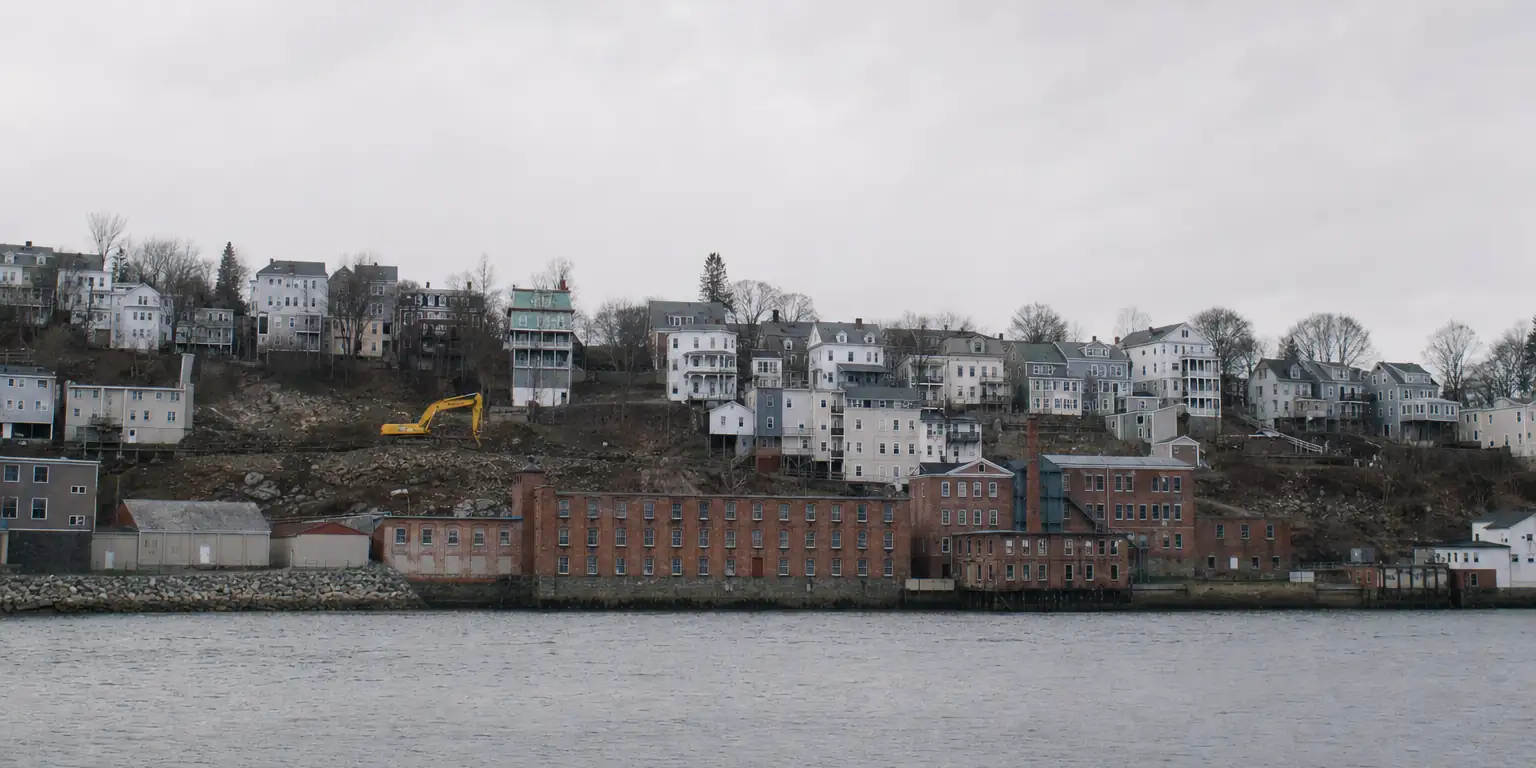
Norwich, CT — The Rose of New England
A tour of excavation across Norwich.
Six neighborhoods. Three rivers. One municipal utility under every street. Here’s what each corner of Norwich actually looks like from the excavation side — and how we work it.
Types of excavation in Norwich, CT
—- ·NPU water & sewer taps
- ·Tight-lot urban foundations
- ·Hillside retaining walls
- ·Street-opening utility trenches
- ·Mill-village foundation repair
- ·Controlled rock & blast work
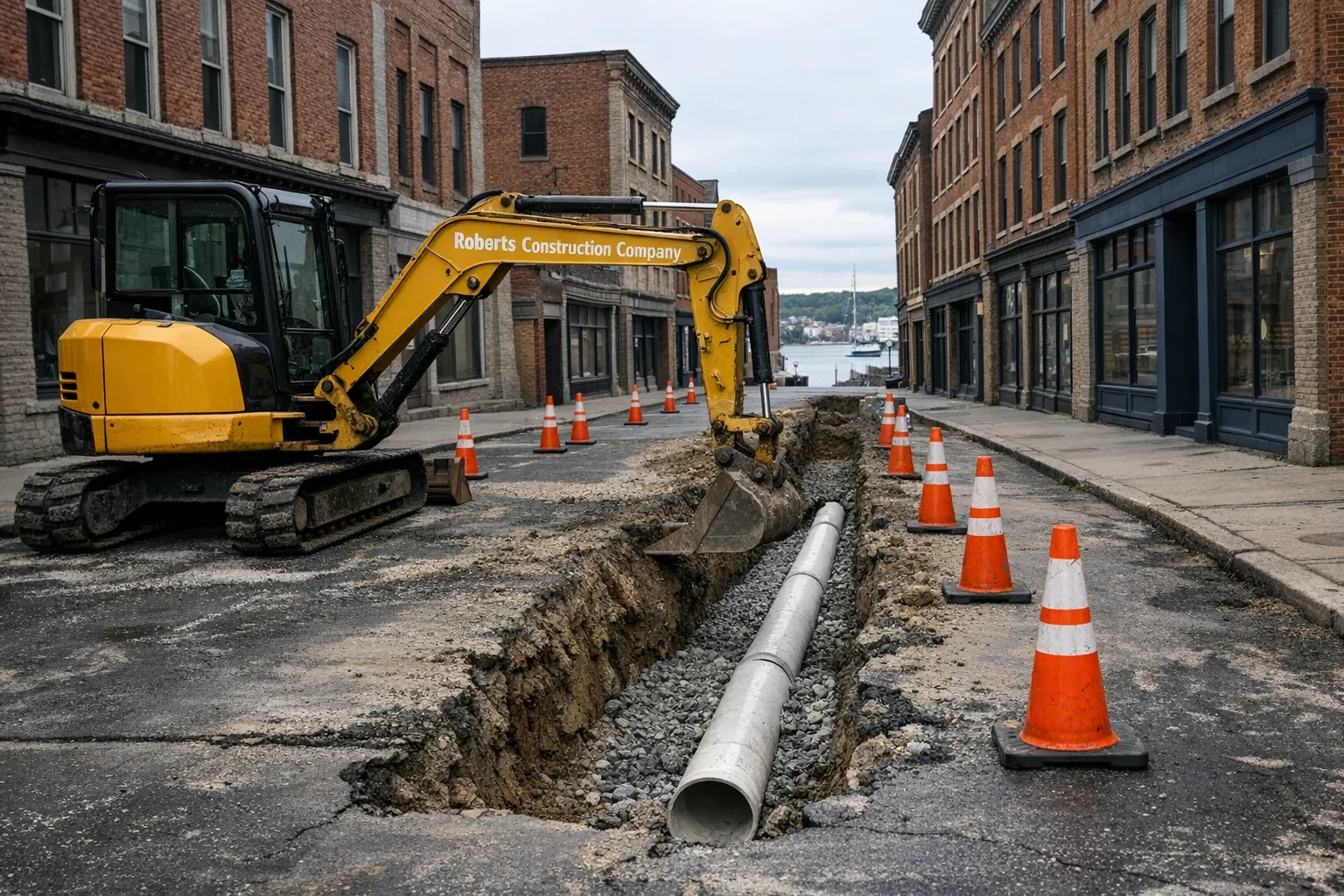
Where the Yantic meets the Shetucket and the Thames starts south. Dense 18th-century building stock, narrow streets, and river-edge flood considerations — FEMA maps matter here before you break ground. Typical work: sewer and water taps through NPU, tight-access foundation repair, and carefully staged street-side trenching.
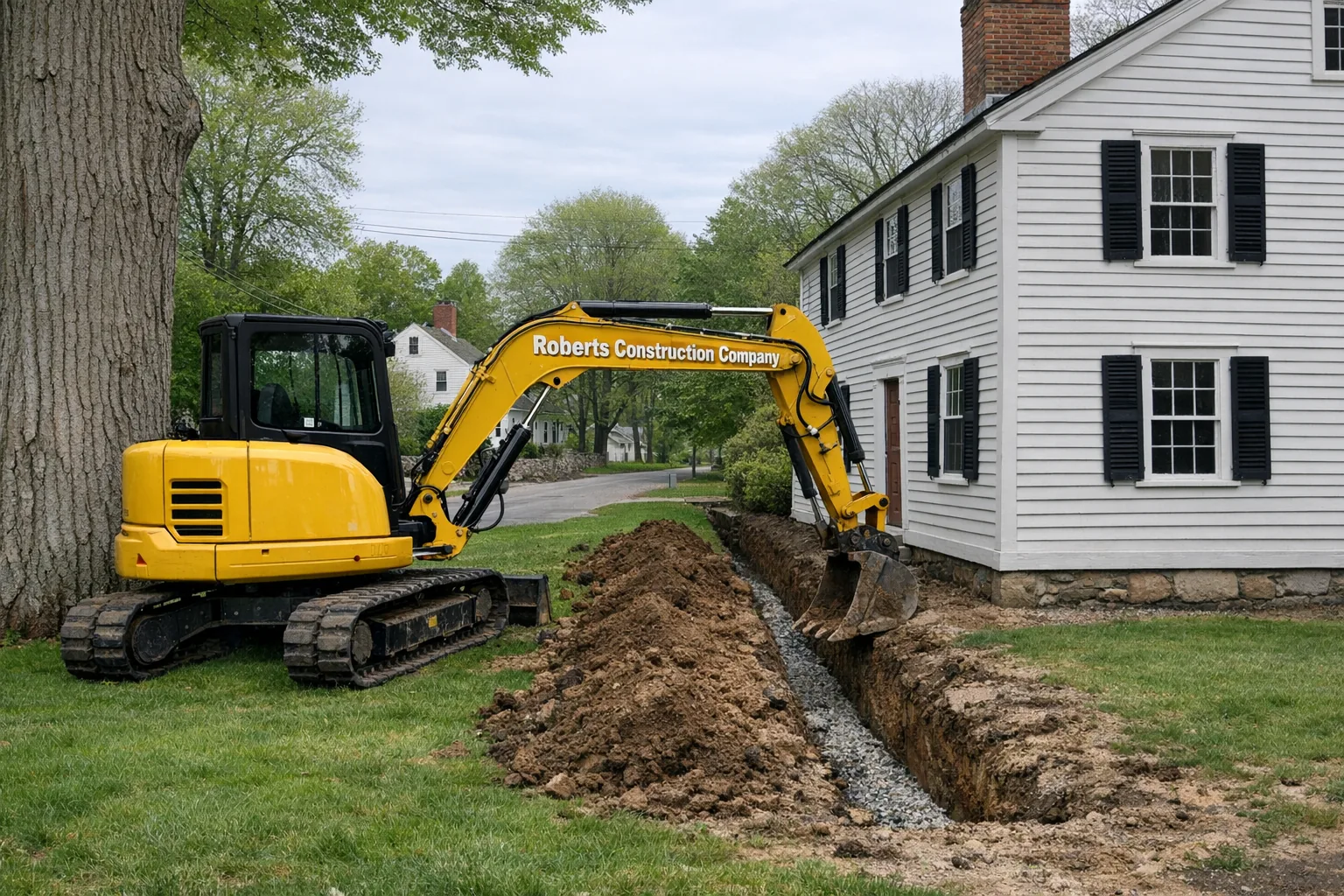
The original agricultural center of Norwich before the harbor took over. Older colonial-era lots, mature trees, the Norwichtown Green Historic District. Work here is usually foundation and drainage, done carefully around close-set old houses and long-established landscape.
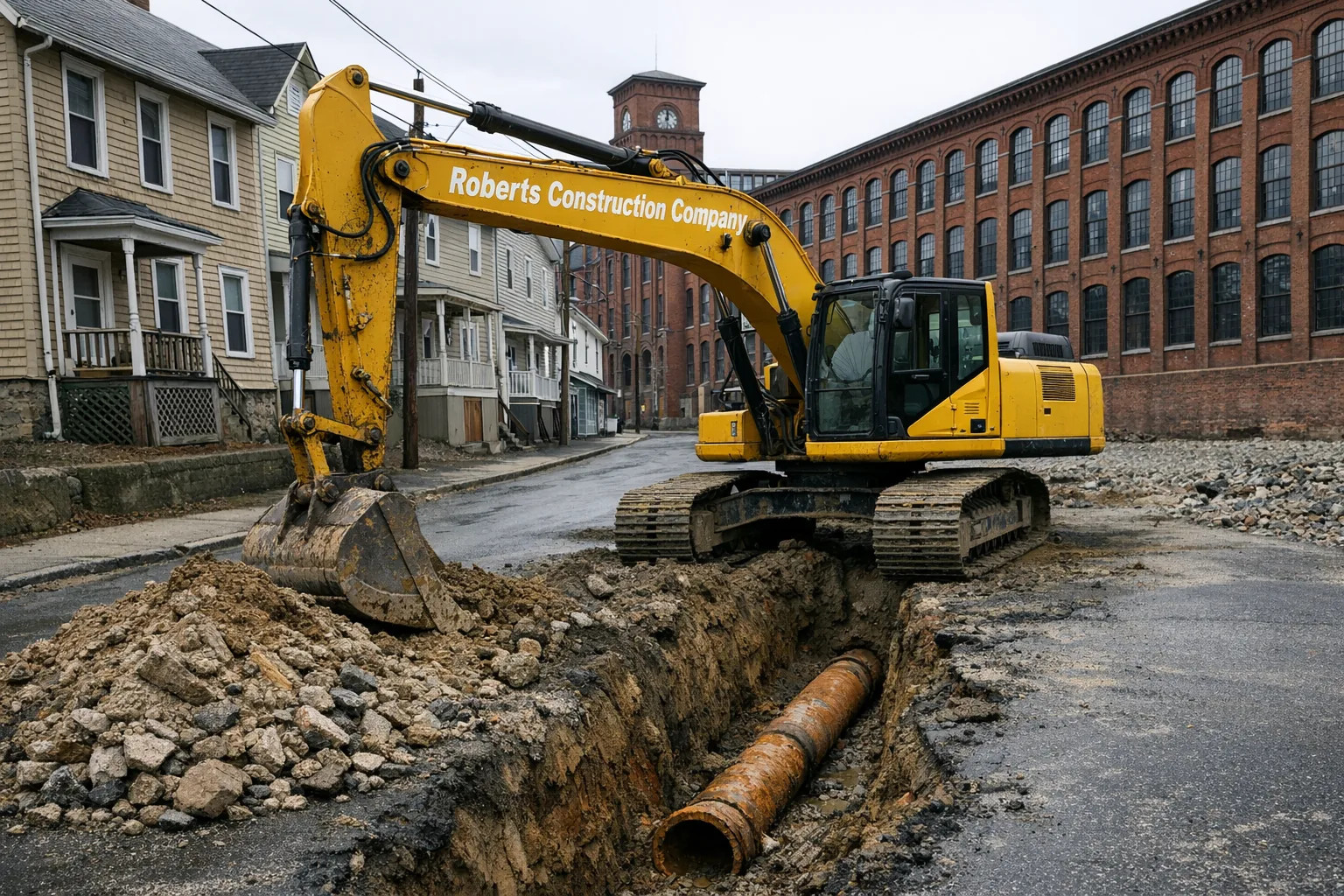
Built in 1866 around Ponemah Mill — once the largest textile mill in the world under a single roof. The village is dense with 19th-century worker housing, rubble-stone foundations, and water/sewer laterals that are decades past their original design life. Typical work: foundation replacements, basement expansion for egress, sewer lateral replacement under narrow streets.
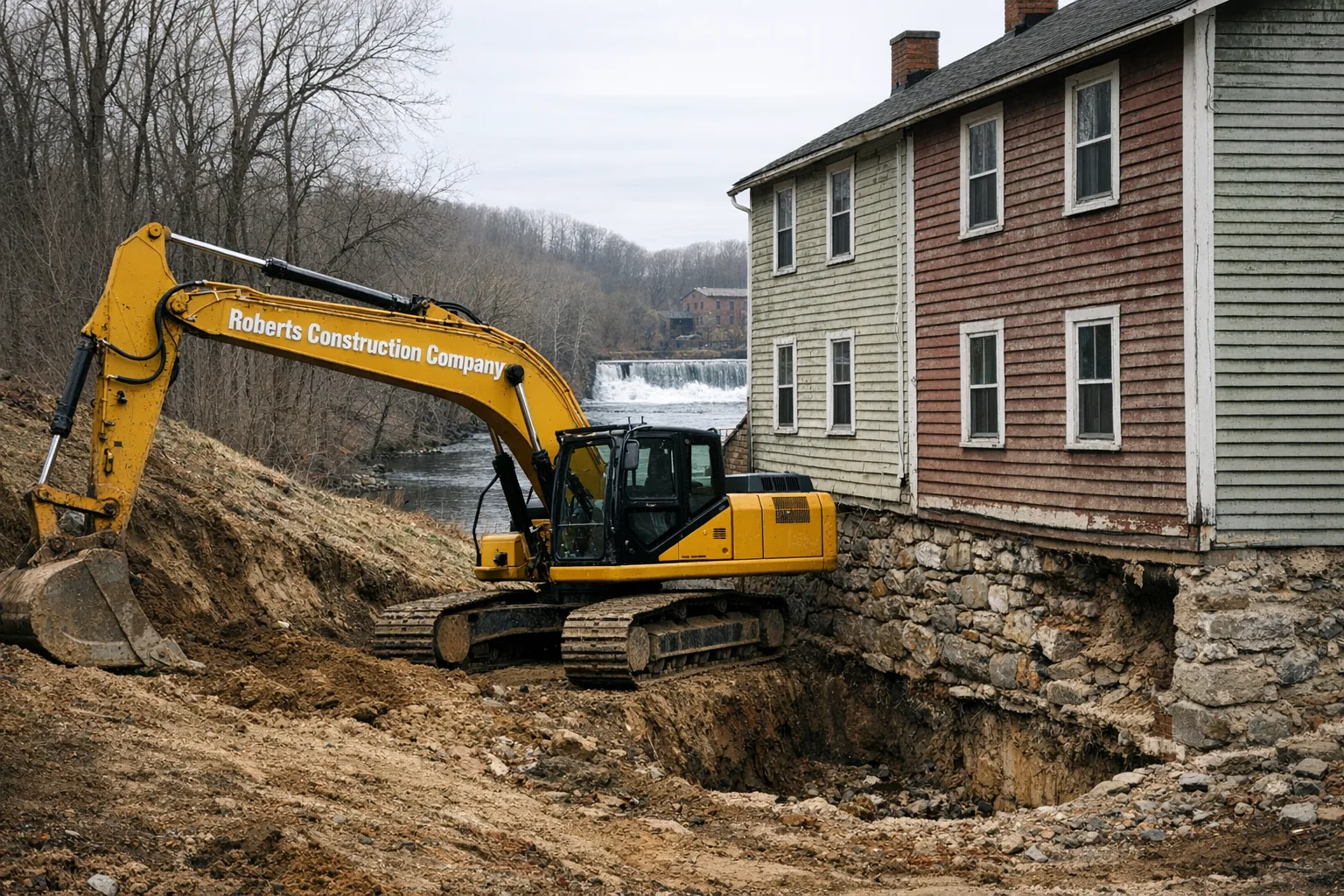
William Greene bought the land in 1826 and transferred it to the Norwich Water Power Company; the Shetucket dam and canals were finished by 1833 and powered tens of thousands of spindles. Today it's a tight grid of mill-era homes on sloping lots. Foundation repair, tight-access excavation, and sewer lateral work dominate.
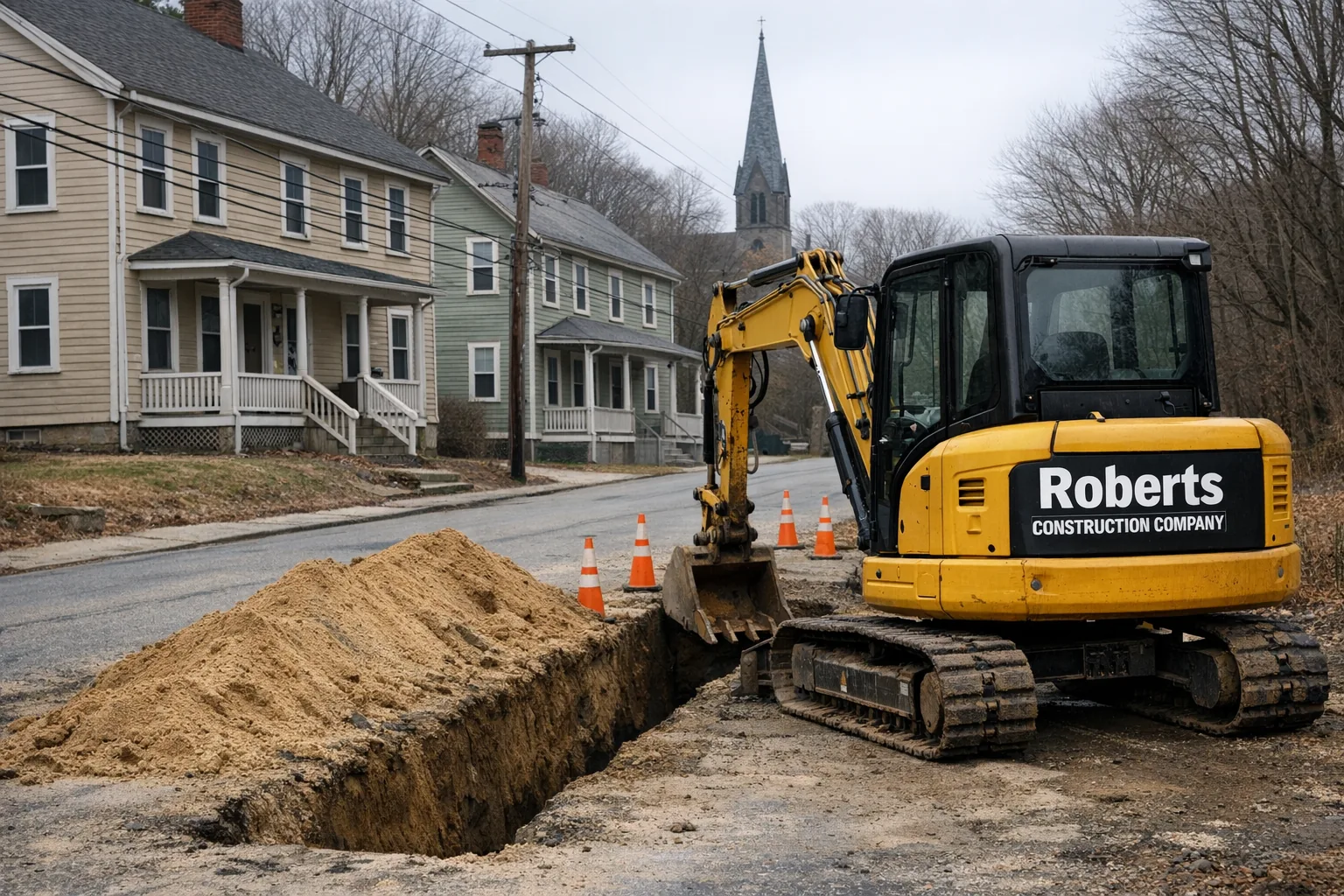
Named after the Yantic River running through it. Originally its own mill town — Yantic Woolen Company — it grew as a planned grid with duplex worker housing and Grace Episcopal Church at its center. Work is usually infrastructure-adjacent: utility trenches, foundation stabilization, and careful work around the planned streetscape.
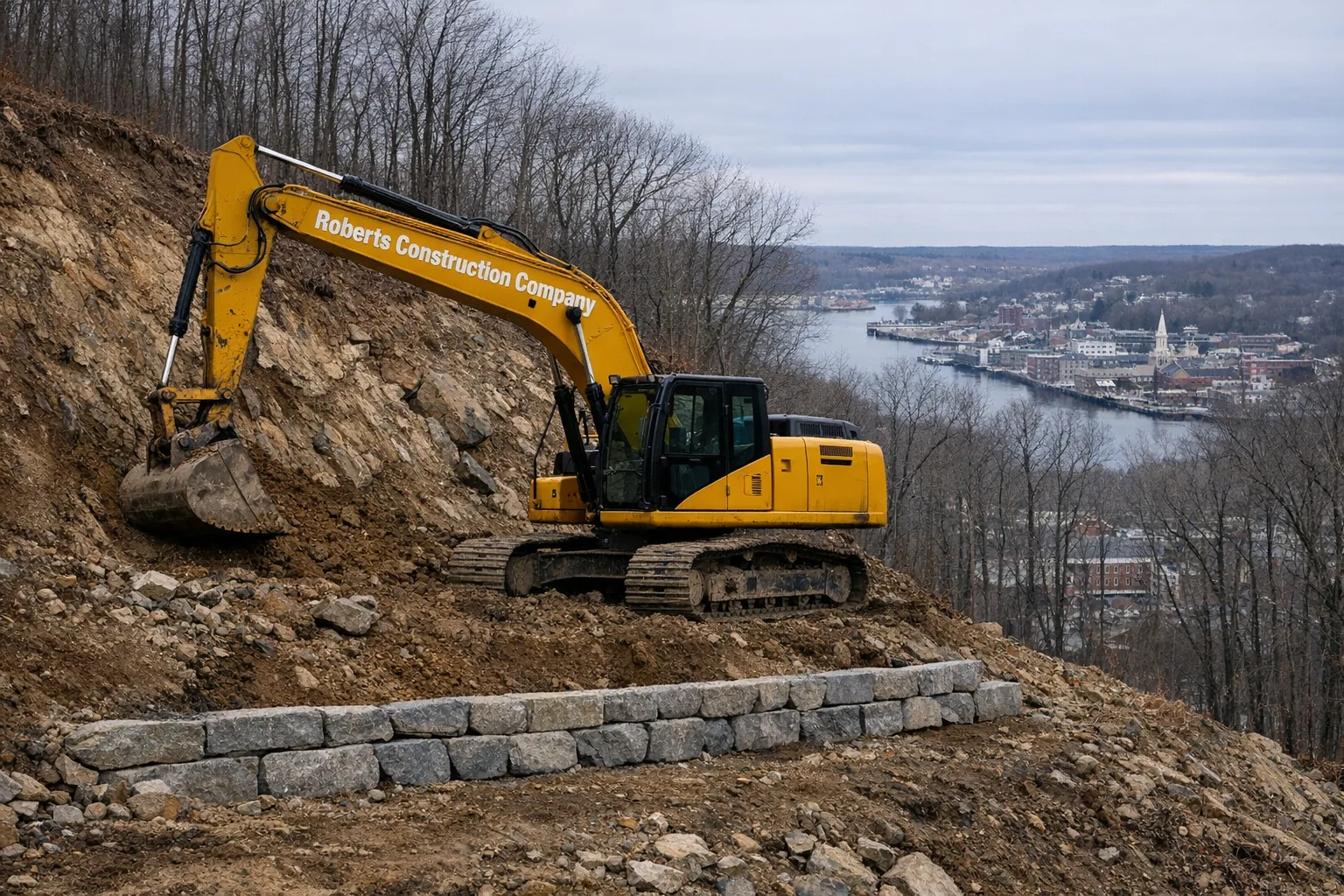
Norwich's residential terraces rise up from the harbor — Laurel Hill and Bean Hill sit high above Chelsea with real grade. Retaining walls, hillside foundation excavation, and drainage regrading become the dominant job type. This is where Norwich stops being a river town and becomes a hill town.
Before we dig in Norwich
Norwich Public Utilities owns the grid. We call, we wait for marks, we coordinate.
NPU owns water, sewer, electric, and natural gas — four services under one roof. Every job in a Norwich right-of-way needs an NPU-coordinated permit and a notice to the NPU Project Coordinator at least one business day before work.
Call Before You Dig (CBYD) comes first on any dig, public or private. Controlled blasting within 200 ft of NPU facilities triggers a formal procedure: coordinator at (860) 823-4513.
General guidance. Confirm current requirements with NPU (customer service: (860) 887-2555), the City of Norwich, and CBYD (811) for your specific parcel.
Excavation services we run in Norwich
Six neighborhoods, NPU-coordinated. Every scope below runs in Norwich.
Septic & sewer
Foundations & structure
Drainage & water
Site, clearing & grading
Driveways, utilities & access
Frequently asked — Norwich
Five things Norwich homeowners and GCs ask before we break ground.
- How do I tap into Norwich's municipal sewer or water?
- Through Norwich Public Utilities (NPU), which owns and operates water, wastewater, electric, and natural gas for the city. We pull the excavation permit, notify the NPU Project Coordinator at least one business day before work, and complete the tap and lateral under permit. Customer Service: (860) 887-2555.
- What's the rule for excavating or blasting near NPU lines?
- Call Before You Dig (CBYD) is required on every job so NPU can mark its gas, electric, water, and sewer. If controlled blasting is needed within 200 feet of any NPU facility, we contact the NPU Project Coordinator at (860) 823-4513 and follow their blasting procedure before detonation.
- Can you work in a Norwich historic district?
- Yes — the Norwich Historic District Commission reviews exterior work in designated districts (Chelsea, Norwichtown, Taftville/Ponemah, Greeneville, Yantic and others). We coordinate when the job's scope requires review; below-grade excavation on private property is usually straightforward, with extra care around neighboring 19th-century structures.
- What's typical for foundations in mill-era Norwich neighborhoods?
- Most of Taftville, Greeneville, and Yantic sit on 19th-century rubble-stone foundations that have shifted over time. We see a mix of underpinning the existing wall, sistering a poured concrete wall against it, or full replacement when the stone is failing. Sloped lots in Greeneville add tight-access constraints that affect the equipment we bring.
- Is flood-zone work different in the Chelsea / harbor area?
- Yes — anything below grade in the FEMA-mapped harbor floodplain needs elevation certificates and finished-floor compliance with the City of Norwich's flood ordinance. We pull FIRMs before the dig, design the foundation to the base flood elevation plus freeboard, and coordinate with the Norwich building official on the floodproofing details.
If your project touches a Norwich street, it touches NPU. Let’s plan it together.
Also in NorwichUnderground utilities Demolition