Field Notes
What we've learned about excavating eastern Connecticut.
Permitting timelines, site conditions, equipment notes, and the occasional war story. One new piece every few weeks, written by the crew that's actually on the jobs.
 November 2026/Permits & Process
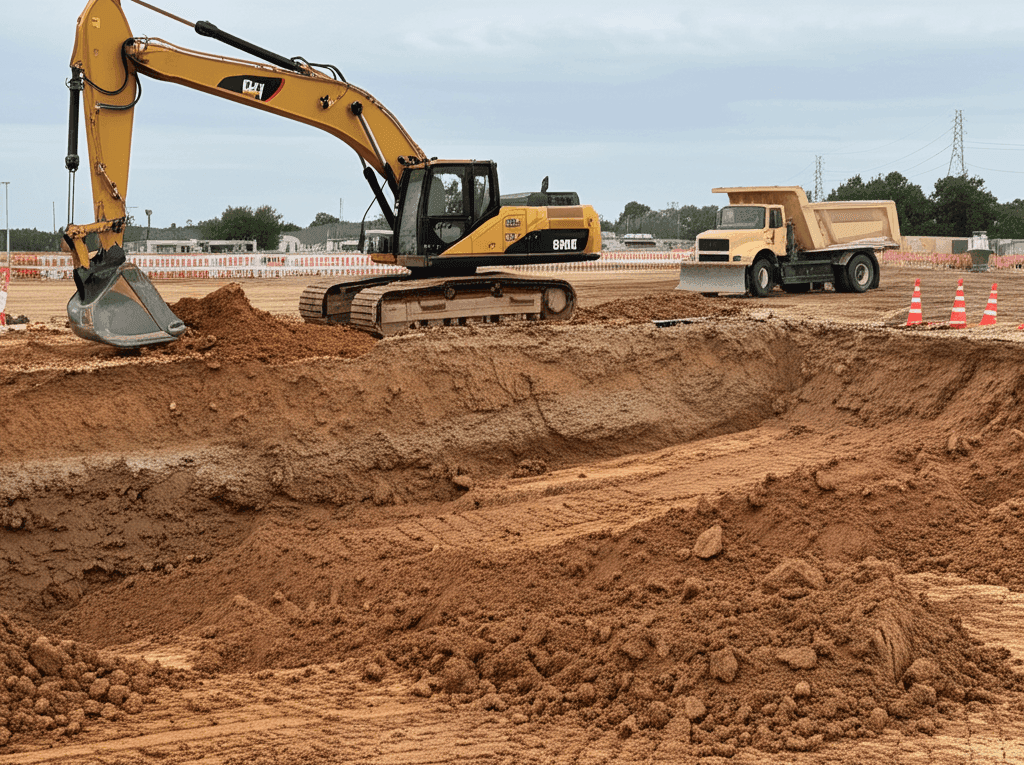
How to Verify an Excavation Contractor in Connecticut and Rhode Island
Five checks that take twenty minutes and screen out most of the people who shouldn't be running a machine on your property.
Before an excavator shows up on your lot, check the state registration, the insurance certificate, the workers' comp policy, and the 811 habit. Here's how to run each check yourself in CT and RI, with the state lookup tools.
Read the full piece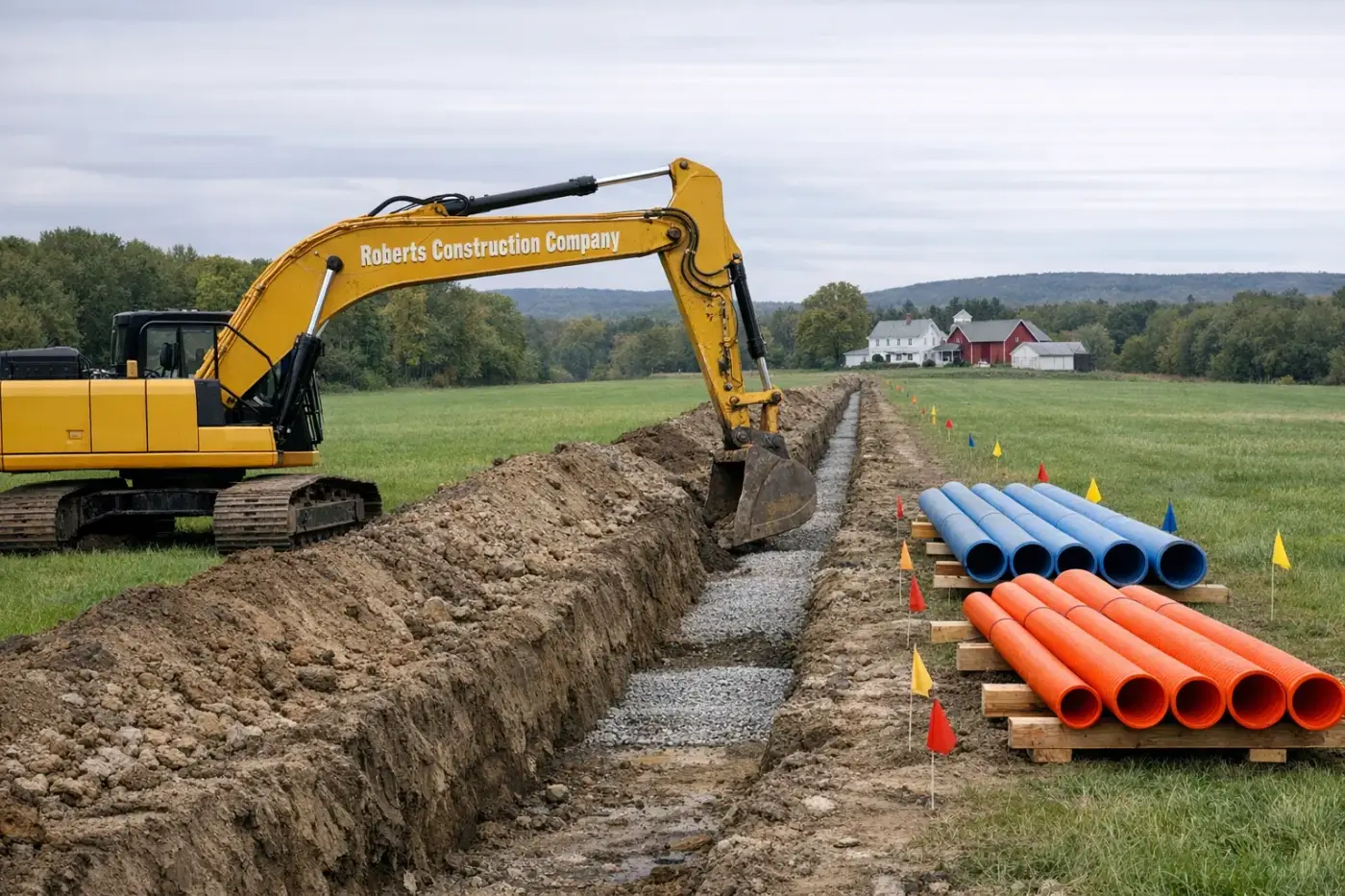 November 2026/Permits & Process
Dig Safe in Rhode Island vs. Call Before You Dig in Connecticut
Two states, two call centers, two clocks. What changes when the job is on the Foster side of the line instead of the Sterling side.
Connecticut uses Call Before You Dig with a two-working-day notice. Rhode Island uses Dig Safe with a 72-hour notice. Both want white premarks and hand digging inside 18 inches of a mark. Here's how the two systems differ and how we schedule around them.
Read the full piece November 2026/Permits & Process
When Excavation Needs an Inland Wetlands Permit in Eastern Connecticut
The upland review area is bigger than the wet spot, the wetland line is set by soil type not standing water, and the clock runs by the town's calendar.
Connecticut regulates digging, filling, and grading inside wetlands, watercourses, and an upland review area that runs 100 feet or more out from them. Here's how to tell if your project is in it, what the town commission needs, and what it does to the schedule.
Read the full piece November 2026/Permits & Process
How RIDEM Septic (OWTS) Permits Work in Western Rhode Island
Rhode Island permits septic systems at the state level, not the health district. Here's the sequence for Foster, Glocester, Scituate, Coventry, and West Greenwich.
In Rhode Island a septic system is an OWTS, the permit comes from DEM in Providence, and a licensed designer runs the paperwork from soil evaluation to Certificate of Conformance. Here's each step, who does it, and where the schedule usually slips.
Read the full piece November 2026/Permits & Process
Demolition Permits, Asbestos Notices, and Disconnects in Eastern Connecticut
Taking a house or barn down is a week of paperwork and a day of machine work. Here's the paperwork, in order.
A Connecticut demolition needs a town permit, a state DPH demolition notification filed ten days ahead, utility disconnects on paper, and a plan for asbestos in anything built before 1980. Here's the sequence and the things that stall it.
Read the full piece November 2026/Permits & Process
The B100a Review: Adding On to a House With a Septic System in Connecticut
An addition, a garage, a pool, or a shed on a septic lot needs the health district to sign off first. Here's what Section 19-13-B100a actually asks.
If public sewer isn't available, Connecticut's Public Health Code requires a B100a review before you add on, convert, or build an accessory structure. The health district has to find a code-complying septic area still exists on the lot. Here's how that works in NDDH and Uncas towns.
Read the full piece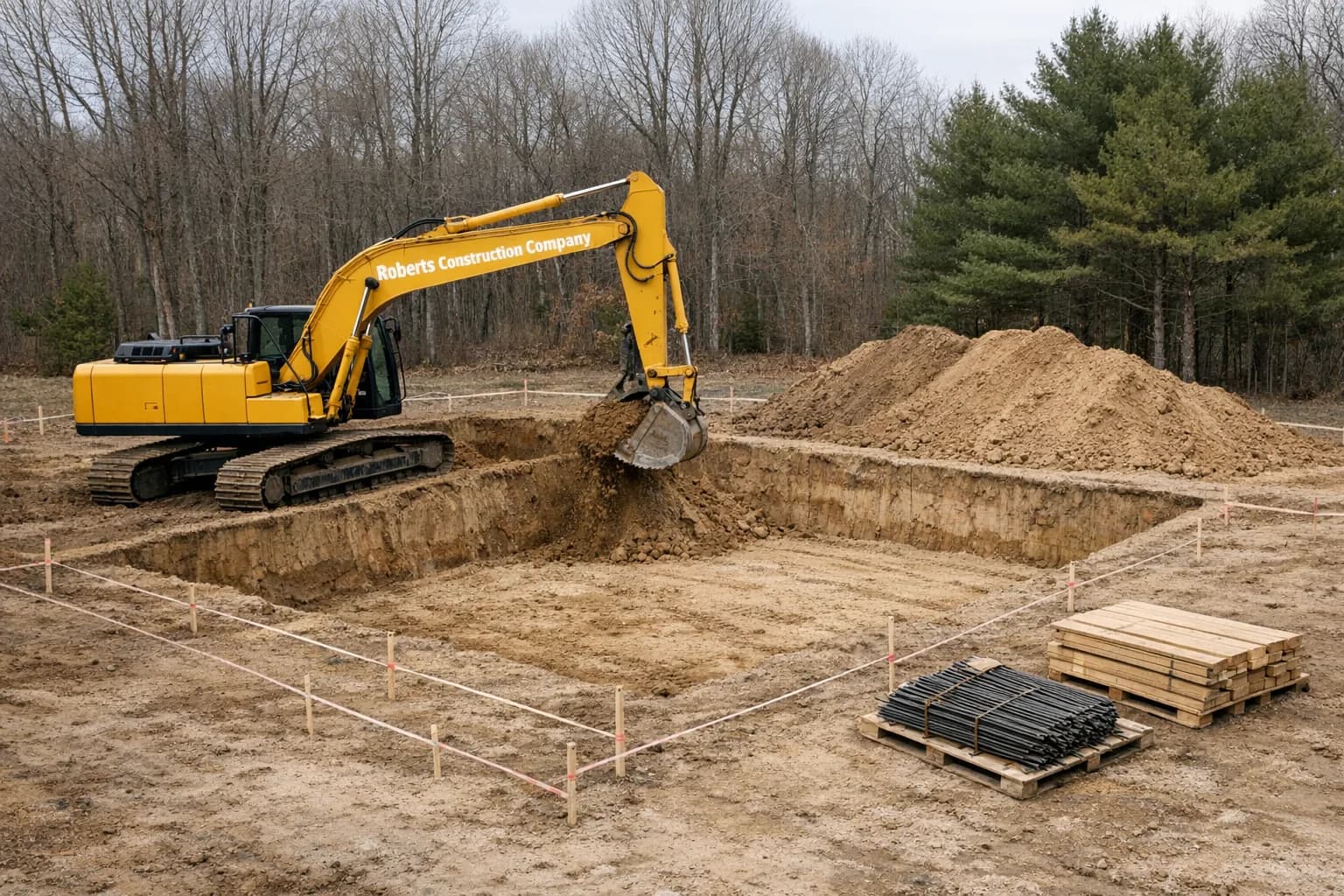 April 2026/Site Conditions
Frost Depth and Footing Design in Eastern Connecticut
What 42 inches actually means when the till is wet, the ledge is shallow, and the inspector wants to see your base.
Connecticut's residential code calls for a 42-inch frost depth on residential footings — but that's the minimum, not the answer. Here's how we actually decide footing depth on eastern CT lots.
Read the full piece March 2026/Permits & Process
How NDDH Septic Permits Actually Work
The Northeast District Department of Health covers 12 eastern CT towns. Here's the timeline, the players, and what slows it down.
If you're installing or replacing a septic system in Lisbon, Plainfield, Brooklyn, or any of the other 12 NDDH towns, the timeline is mostly determined by the health district, not the town. Here's how it actually runs.
Read the full piece February 2026/Permits & Process
What 'Call Before You Dig' Actually Catches
CBYD is free, required by Connecticut law, and saves real lives. Here's what it does and what it doesn't.
Call Before You Dig (811) is required by Connecticut law on any excavation. It catches most underground utilities — but not all of them. Here's what to know before you put a shovel in the ground.
Read the full piece