
Site Conditions · April 8, 2026
Frost Depth and Footing Design in Eastern Connecticut
What 42 inches actually means when the till is wet, the ledge is shallow, and the inspector wants to see your base.
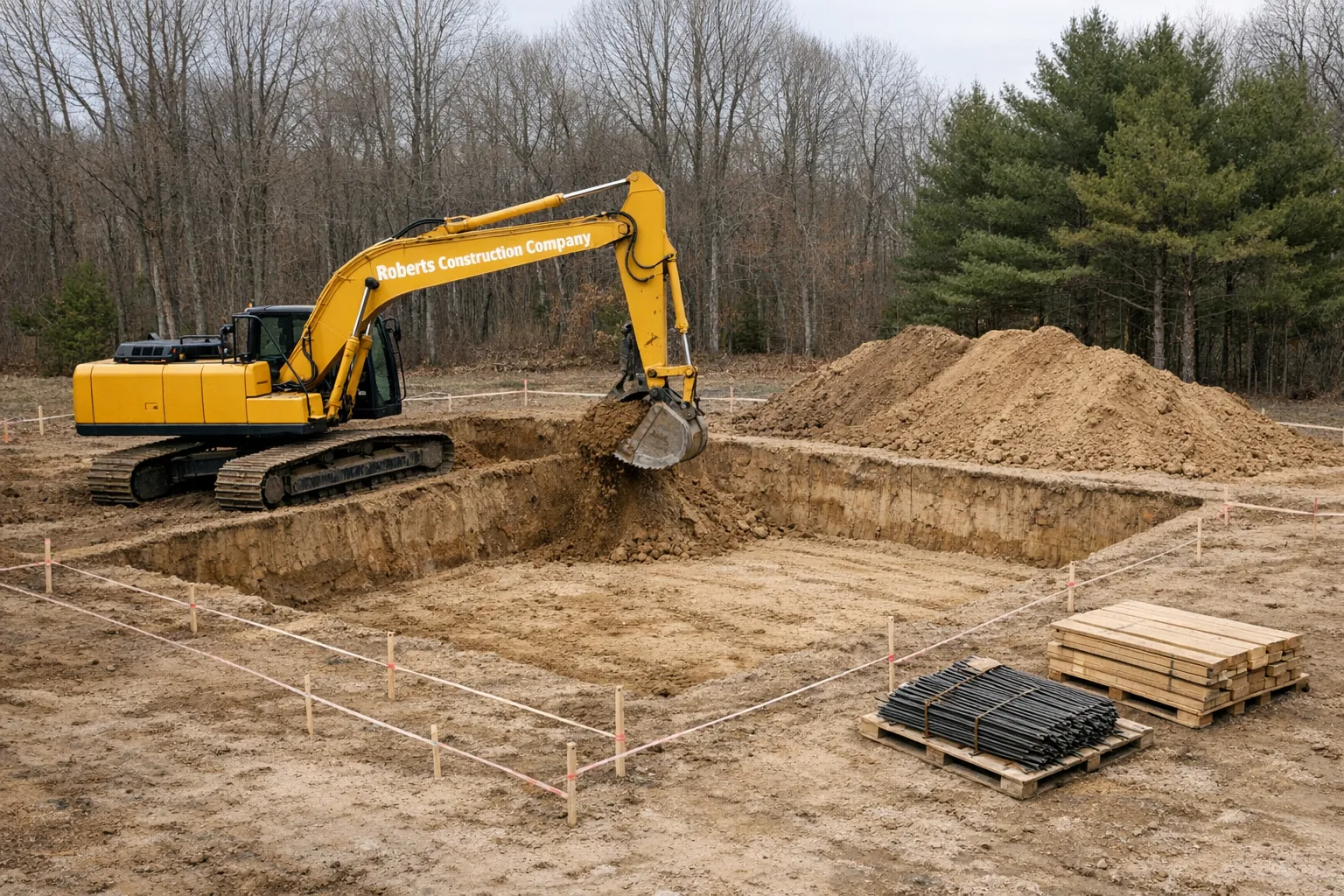
The Connecticut State Building Code sets a 42-inch minimum frost depth for residential footings — a number drawn from the worst expected winter penetration in Connecticut soils. On most eastern CT lots, 42 inches is enough. But the number is a floor, not a guarantee. Here's what we actually look at before we set a footing.
Why 42 inches is the floor, not the answer
Frost penetration depends on three things the code doesn't see: how wet the soil is, how exposed the corner is, and whether there's a heat source above. A dry, sheltered, heated-basement corner barely freezes. A wet, shaded, slab-on-grade corner facing northwest can hit 50+ inches in a hard winter. Two corners of the same foundation, same lot, same year — different frost depths.
Eastern Connecticut's seasonal high water tables and clay-rich till in the river valleys (Quinebaug, Shetucket, Natchaug) push frost deeper than the inland Connecticut average. Sterling and Plainfield bottomland soils hold water through November, then freeze hard. The 42-inch code minimum assumes drier conditions than what we usually find.
What we test before we set design depth
- Test-pit at the footing corner most exposed to north winter wind, not just the easiest corner to dig
- Probe for ledge — if the till transitions to ledge above design depth, we have a different conversation
- Note the seasonal high water table from the soil profile (mottling, gleying in the C horizon usually tells us)
- Check the surface drainage pattern uphill of the foundation footprint
When we go deeper than 42 inches
On wet bottomland lots, slab-on-grade designs, exposed corners on hillsides, and any unheated structure, we typically set design depth at 48 inches or deeper. The marginal cost of 6 extra inches of dig is small compared to the cost of a single frost-heave crack three winters in. Garages, sheds, and detached structures are the most common candidates for deeper footings — the inspector will sign off at 42, but the structure will thank you for 48.
Underpinning when the original wasn't deep enough
We see this constantly on 1890s mill-era homes in Willimantic, Putnam, and Norwich — original footings set to 1800s frost depths (sometimes 24 inches), now showing crack patterns consistent with seasonal heave. The fix is underpinning: dig under the existing footing in alternating bays, pour new footings down to modern design depth, and the building never lifts. It's regular work and the technique is well-understood.
Bottom line
42 inches keeps you legal. Site-specific design depth keeps the foundation flat for the next 80 years. Test-pit, read the soil, then decide — the inspector cares about the minimum, but your grandchildren will care about how the corners look in 2106.
Related services
Where we run this work
Have a job like this?