
Permits & Process · November 1, 2026
How to Verify an Excavation Contractor in Connecticut and Rhode Island
Five checks that take twenty minutes and screen out most of the people who shouldn't be running a machine on your property.
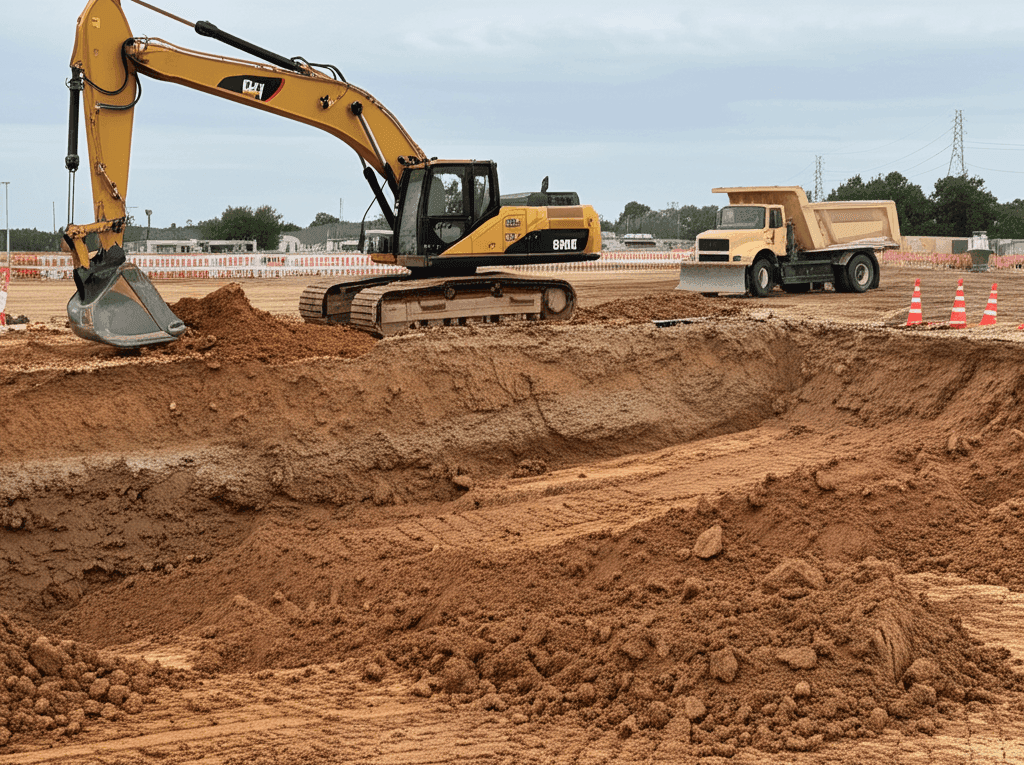
Anyone with a trailer and a rented mini-excavator can call themselves an excavation contractor. The state registration, the insurance, and the paperwork habits are what separate a contractor from a guy with a machine. Here are the checks we'd run on ourselves if we were the customer, in the order we'd run them. Each one takes a few minutes and uses a state website, not a review site.
1. Check the state registration
Connecticut: DCP eLicense
Connecticut contractors register with the Department of Consumer Protection. The lookup is the eLicense portal: choose Online Services, then Lookup a License, and search by business name or credential number. Two registration types matter for dirt work. The Home Improvement Contractor (HIC) registration covers work on an existing home. The New Home Construction Contractor (NHC) registration covers building new homes and the site work that goes with them. Ask which one the contractor holds and make sure it matches your project. Roberts Construction is registered as New Home Construction Contractor NHC.0014110, first issued in 2015, and the record shows it as authorized to engage in home improvement, which covers both kinds of job. You can confirm that on eLicense in under a minute.
DCP's own advice is that a credential that doesn't match the contractor's name is a red flag. If the number on the truck pulls up a different business, stop there.
Rhode Island: Contractors' Registration and Licensing Board
Rhode Island runs registration through the Contractors' Registration and Licensing Board (CRLB). Anyone who advertises as a contractor or does residential work has to be registered, carry at least $500,000 of liability insurance with the board named as certificate holder, and renew every year. The registration number has to appear on contracts and advertising. Look it up on the CRLB site before you sign anything for work in Foster, Glocester, Scituate, Coventry, or West Greenwich. Our registration is GC-38819, Residential/Commercial Contractor, renewed annually.
2. Get the insurance certificate, then call the agent
Ask for a certificate of insurance (COI) issued to you by name, not a photocopy of last year's certificate made out to somebody else. It should show general liability and, if the contractor has any employees, workers' compensation. Then call the insurance agent listed on the certificate and confirm the policy is active. Certificates get forged and policies get cancelled for non-payment; the agent's office is the only place that knows for sure.
Workers' comp is the one people skip, and it's the one that lands on the homeowner. If an uninsured worker gets hurt on your property, you can end up on the claim. Connecticut's Workers' Compensation Commission runs a free Coverage Verification Service: type in the business name and it tells you whether a policy exists. Rhode Island requires workers' comp for any registered contractor with employees and asks for the certificate at registration.
3. Ask who files the 811 ticket
A contractor who digs with a machine in Connecticut is required to notify Call Before You Dig at least two full working days before breaking ground. In Rhode Island it's Dig Safe, 72 hours excluding weekends and holidays. The answer you want is "we file it, here's the ticket number before we start." If the answer is "you can call that in if you want," the contractor is either unfamiliar with the law or planning to skip it. Either way, that's the person who hits your gas service.
4. Look at the written scope
An excavation proposal should say what's being dug, to what depth and grade, what happens to the spoils (stockpiled, spread, or trucked off), what happens if ledge or groundwater shows up, and who pulls which permits. A one-line quote with a lump-sum number means the hard conversations happen after the machine is on site. Connecticut also requires home improvement contracts to be in writing with start and completion dates, so a verbal deal isn't just risky, it's outside the law.
5. Check the trail of real jobs
Reviews help, but ask for two references for the same kind of work you're hiring for, in your town or the next one over. A contractor who has set septic systems through NDDH or RIDEM, cut foundations into Sterling ledge, or trenched water services in Norwich will have a homeowner who'll take the call. Someone who can't produce one has either never done it or doesn't want you talking to the last customer.
The lookups, in one place
- Connecticut DCP eLicense lookup — Search HIC and NHC registrations by business name or number.
- Connecticut WCC Coverage Verification Service — Confirms a workers' compensation policy exists for a business.
- Rhode Island Contractors' Registration and Licensing Board — Registration lookup, complaint history, and insurance requirements.
- Call Before You Dig (Connecticut 811) — Locate requests and ticket status for Connecticut excavation.
- Dig Safe (Rhode Island 811) — Locate requests for Rhode Island, Massachusetts, and northern New England.
If you want to run these checks on us, go ahead. NHC.0014110 is on the eLicense portal, GC-38819 is on the CRLB site, the certificate of insurance comes with every proposal, and the 811 ticket number is in the job folder before the trailer leaves the yard.
Related services
Where we run this work
Have a job like this?