
Job file · Downtown Putnam, CT
Underground utilities in Putnam, from permit to paved patch.
This is what a water or sewer connection under a downtown Putnam street actually involves — the WPCA counter, the street-opening permit, the 811 marks, the 6:30 a.m. saw-cut ahead of the antiques-district foot traffic, and the patch we come back for. Walked through in order, the way we run it.
Four parties on every downtown connection
Putnam WPCA
One authority for both water and sewer — connection review, tap standards, inspection. Office on Church Street; plant on Kennedy Drive.
Town of Putnam
Street-opening permit and restoration standard. Nontransferable permit, 24-hour notice before each phase of work.
CBYD · 811
Statewide locate before any excavation. The marks decide where the machine digs and where hands take over.
Roberts Construction
Permits, trench, tap, lateral, backfill, patch — one crew accountable for the whole sequence.
The walkthrough
Eight stages, in the order they happen.
A typical downtown water/sewer connection or sewer lateral replacement, compressed to its checkpoints. Upland jobs skip some steps; downtown jobs skip none.
- 01Week zero
Walk the job, pull the records.
Every downtown Putnam connection starts on the sidewalk, not in the trench. We find where the existing lateral leaves the building, where the main runs, and what the record drawings say — the WPCA office on Church Street holds the system records, and on the brick blocks those records matter, because plenty of laterals predate anyone now working on them. If the line is a mystery, we camera it first.
Downtown laterals are commonly mill-era clay. Assume nothing until the camera says otherwise.
- 02Week one
WPCA connection, one counter for both pipes.
Putnam is unusual in a useful way: the WPCA operates the water system and the sanitary sewer system both. A combined water-and-sewer job means one authority reviewing the tap, one inspector to schedule, one set of connection standards. We file the connection paperwork, agree on the tap location, and set the inspection sequence before a wheel turns.
- 03Week one
The street-opening permit.
No one opens a Putnam street without a permit from the town — it is nontransferable, and the town wants at least 24 hours’ notice before each phase of the work. Restoration has to follow the State of Connecticut standard specifications for roads, bridges, and incidental construction. The Highway Department maintains 64 miles of road and more than 18 miles of sidewalk; they take their pavement seriously, and so do we, because our patch sits in their street.
General guidance — the permit terms are the town’s, and they control.
- 04Dig-day minus two
CBYD 811 marks.
Call Before You Dig, every time, with the legally required notice before excavation. Under a downtown Putnam street the paint matters more than usual: gas, electric, communications, storm drains — the town alone maintains 17.5 miles of storm sewer with over 900 structures — and the water and sewer mains we are aiming for. The marks define where the machine digs and where hands do.
- 05Dig day, 6:30 a.m.
Saw-cut and open the trench.
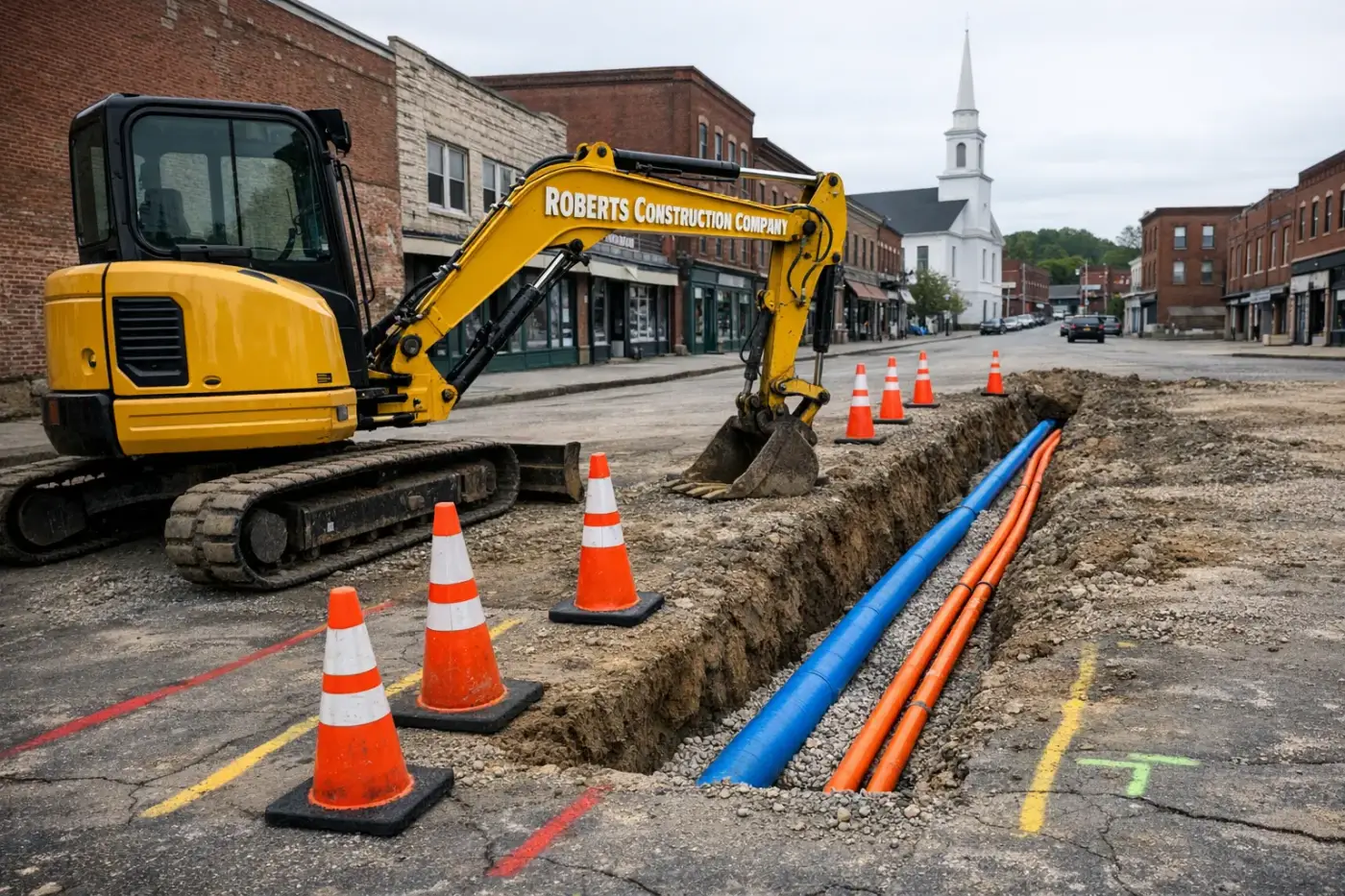
Early start, on purpose. The antiques district draws real foot traffic from mid-morning on, so the noisy, dusty part of the day happens before the sidewalks fill. We saw-cut a clean rectangle — a straight cut now is a tight patch later — then trench with a box set as the cut goes down. River-valley blocks sit close to Quinebaug groundwater, so pumps and stone are on the truck before we need them.
Within a few feet of the marks, it’s hand digging and a vac when warranted. No exceptions downtown.
- 06Dig day, midday
The tap and the lateral.
Water side: a tap on the main, new service line, curb stop at the property line. Sewer side: connection at the main or the existing wye, new lateral laid on grade with bedding that will not settle into a belly. The WPCA inspects before anything is buried — we schedule that window in advance so the trench is not sitting open waiting on a green light.
- 07Dig day, afternoon
Backfill in lifts, temporary patch.
Backfill goes in compacted in lifts — this is the step that decides whether the street shows a dip in two winters. Then a temporary patch so traffic and pedestrians roll over the cut the same evening. Nothing about the trench should be an overnight problem for the block; if anything stays open, it is plated and cold-patched at the edges.
- 08The return trip
Permanent pavement, sidewalk, done.
After the backfill has proven itself, we come back for the permanent patch to the town’s restoration standard — full-depth pavement, joints sealed, and sidewalk panels replaced in kind where the cut crossed them. Downtown Putnam is a walking district; the sidewalk matters as much as the road. The job is finished when the street reads like we were never there.
General guidance — confirm current requirements with the Putnam WPCA, the Town of Putnam, and CBYD (811) for your specific parcel and scope.
Why downtown Putnam is a lateral-replacement town.
The brick blocks around Main Street went up in the mill era, and a lot of what serves them underground is original. Then 1955 happened — hurricanes Connie and Diane back to back, the Quinebaug through second-story windows — and the flood did not just wreck buildings, it shifted foundations and the sub-grade lines under them. Seventy years later, we still open trenches downtown and find pipe that has been living with that movement ever since.
So the everyday work here is replacement and connection: water lines to storefronts and apartments over them, sewer laterals under the street, electrical conduit for building upgrades, and drainage on parcels that learned their flood lesson the hard way. The same utility trenching discipline runs through all of it — and it is the downtown half of the excavation work we describe on our Putnam excavation page.
Frequently asked — Putnam utilities
Six questions about water, sewer, and conduit work under Putnam streets.
- Who runs water and sewer in Putnam?
- One authority: the Putnam Water Pollution Control Authority (WPCA), which operates both the municipal waterworks and the sanitary sewer system, with its office on Church Street and the treatment plant on Kennedy Drive discharging to the Quinebaug. That single point of contact simplifies a combined water-and-sewer connection compared to towns where two utilities have to be coordinated separately.
- Do I need a permit to open a Putnam street?
- Yes. Nobody opens an existing or proposed street in Putnam without a street-opening permit issued through the town — the permit is nontransferable, and the town requires at least 24 hours’ notice before each phase of the work. Restoration methods and materials follow the State of Connecticut standard specifications for roads and bridges. We pull the permit and handle the notices as part of the job.
- How disruptive is a lateral replacement on the antiques-district blocks?
- Usually one to two days of open trench, and we stage it deliberately: early starts so the cut is safe and plated before weekend foot traffic builds, steel plates over anything left open, and coordination with affected storefronts before we mobilize. Putnam’s downtown lives on its walk-in trade — we plan the dig around that, not the other way around.
- Why do downtown Putnam laterals fail so often?
- Age, mostly. The brick blocks went up in the mill era and many laterals are original clay pipe that has been moved at least once — the 1955 flood shifted foundations and sub-grade lines all through the river valley. Root intrusion at the joints, bellies from settlement, and outright collapse are the usual findings when we camera a downtown line before quoting.
- Is groundwater a problem for trenches near the Quinebaug?
- On the river-valley blocks, plan on it. Trenches below about river grade take on water fast, so we bring pumps and stone bedding, and we shore per depth. Upland Putnam — the Heights, the Pomfret Road side — digs drier and more predictably in glacial till.
- Can you run electrical or communications conduit in the same trench?
- Often yes, with required separations. If a street is already open for a water or sewer connection, adding electrical conduit or a drainage lateral in the same mobilization saves a second cut and a second patch — worth asking about before we schedule, because the street-opening permit covers the opening, and one opening is cheaper than two.
One opening, one patch, done
If your Putnam project needs a pipe under a street, start the conversation before the design locks — the permit sequence rewards planning.
More underground work: our underground utilities service covers the full scope. Also in Putnam: excavation · demolition.
Also in PutnamExcavation Demolition