
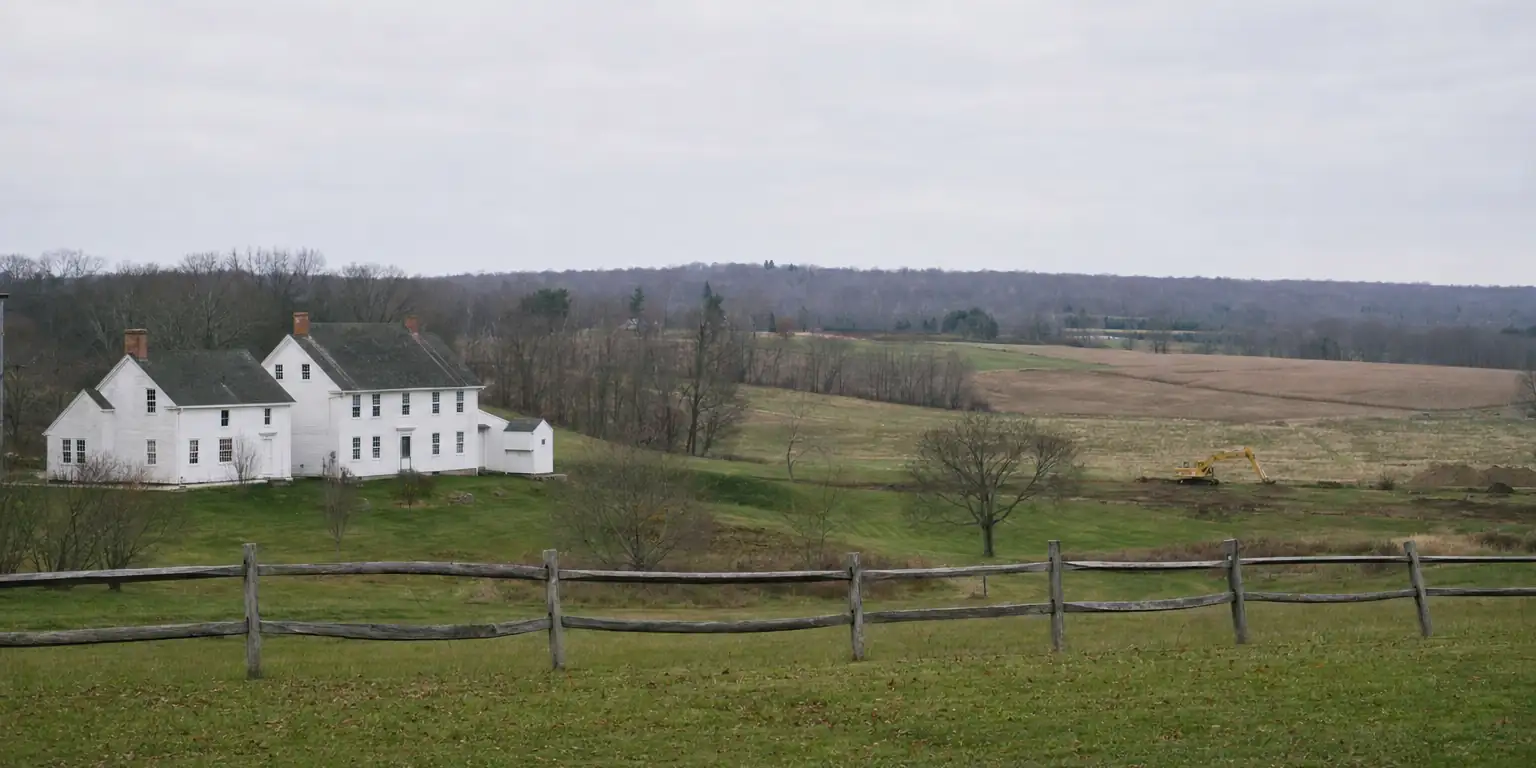
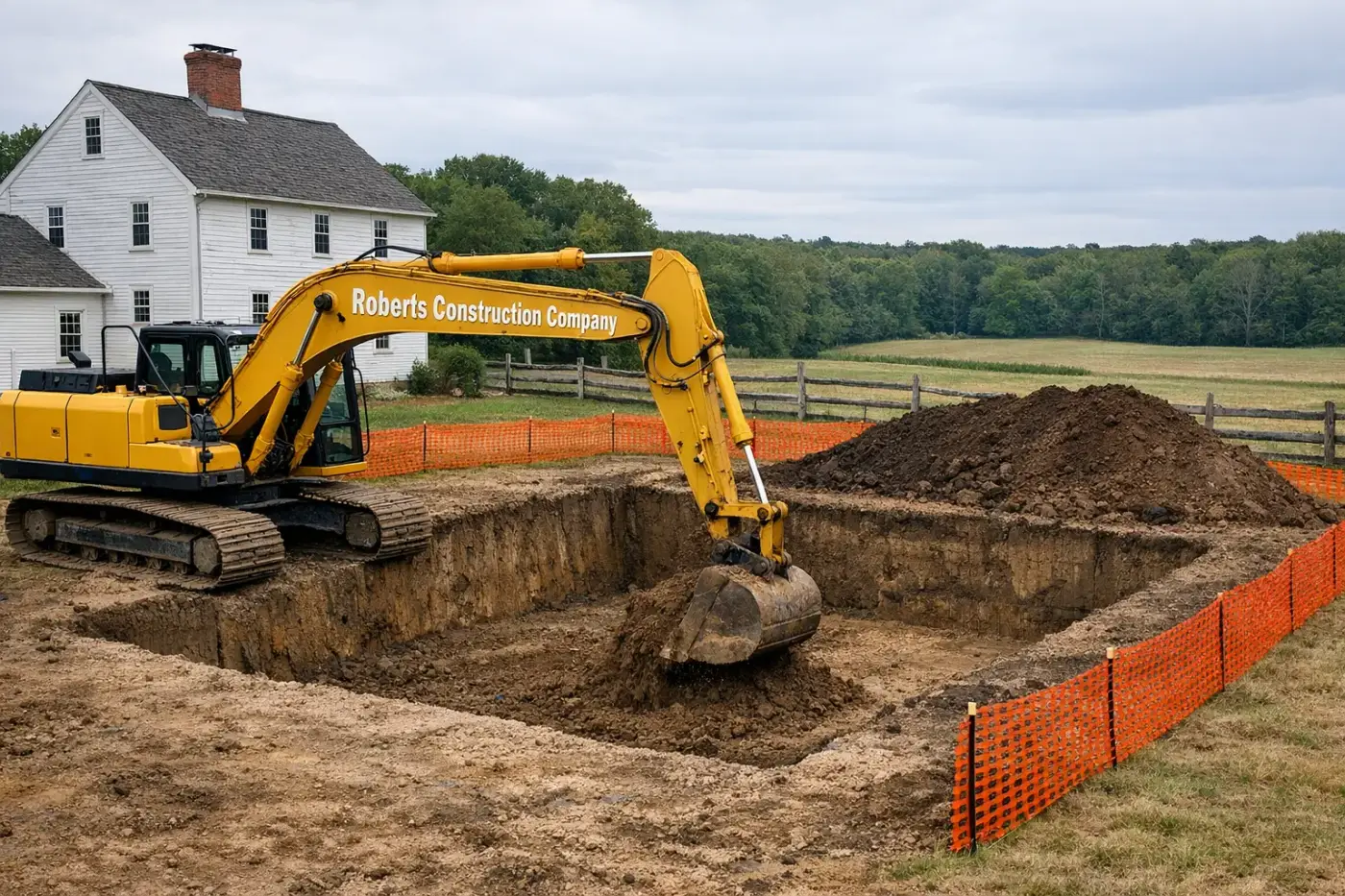
Farm parcels are the daily job here.
Brooklyn’s zoning protects agriculture in a way most of its mill-town neighbors no longer do. Lots are bigger; houses sit further back; outbuildings — barns, equipment sheds, shops — are part of almost every parcel. Excavation work follows from that. New foundations are usually outbuilding pads or rural-residential basements. Drainage is for keeping a yard workable in mud season, not for managing river-bottom flooding. We approach Brooklyn jobs with the assumption that there’s already a tractor on the property and we shouldn’t be in its way.
Septic is NDDH territory.
Brooklyn permits septic through the Northeast District Department of Health — the same regional agency that covers Sterling, Plainfield, Killingly, and Putnam. Engineer-designed OWTS, CT-licensed installer, NDDH approval before any earth moves. Older parcels that originally ran on cesspools are typical replacement candidates; we coordinate the design, handle the install, and keep the inspection schedule on track.
Around the Green: keep it quiet.
The Brooklyn Green and the Old Trinity Church area read as a historic district even where they aren’t formally designated. Stone walls run along property lines. The houses date to the late 18th and early 19th centuries, and most are still on rubble-stone foundations. Excavation here means careful basement work, lateral repairs that don’t disturb the streetscape, and grading that respects existing stonework. We work small, slow, and cleaned-up.
Drainage on glacial-till uplands.
Most of Brooklyn sits on glacial till — strong bearing, but the upper layers can hold water longer than sandier soils want to. Curtain drains, regraded swales, and proper roof-line gutters tie into the field on most farm-parcel jobs. The Quinebaug River grazes the south end of town, but Brooklyn isn’t a river-driven hydrology problem the way Plainfield or Putnam is. The water issue here is local and slow.