Griswold, CT
One town. One borough inside it. Two job profiles that don’t look anything alike.
Griswold is unusual: it contains the incorporated borough of Jewett City — a self-governing chartered borough sitting inside the town like a city-state. The borough has its own utilities and its own job mix. Outside the borough line, Griswold reverts to rural eastern Connecticut.
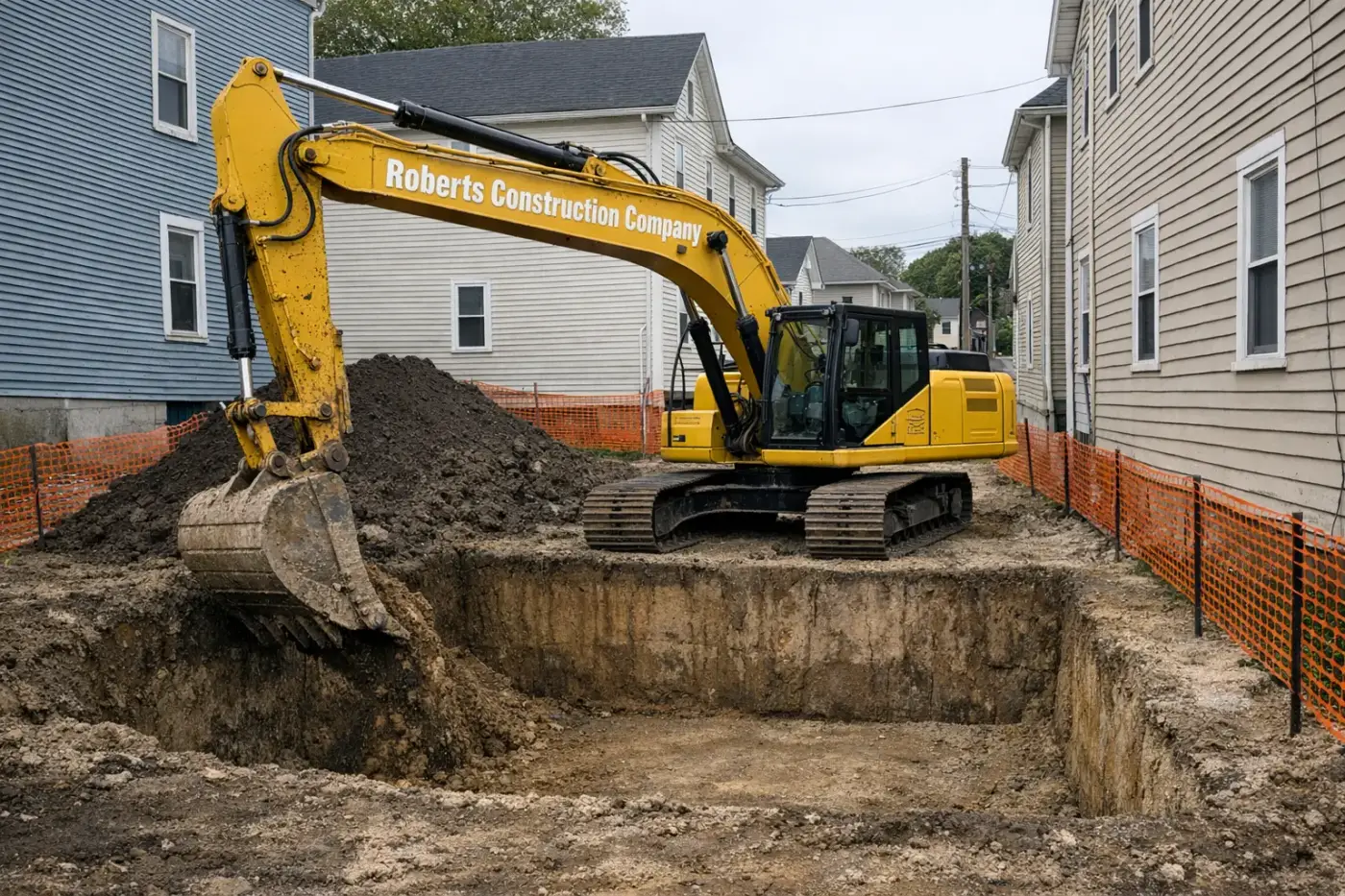
Outside the borough: Pachaug, Quinebaug, and a lot of state forest.
The town of Griswold wraps around Pachaug State Forest — at roughly 27,000 acres, the largest state forest in Connecticut. The Pachaug River runs through, the Quinebaug forms the western edge, and the south end butts up against Voluntown. Outside the Jewett City borough line, Griswold is rural: Uncas Health District septic, drilled wells, glacial-till uplands, and forest-edge parcels with whatever wetland buffers the streams pull with them.
Job profile out here looks like Sterling or Voluntown: foundations on till, OWTS install and repair, long rural driveways, and drainage on lots that fall toward the Pachaug or one of its tributaries.
Inside the borough: a chartered municipality with its own utilities.
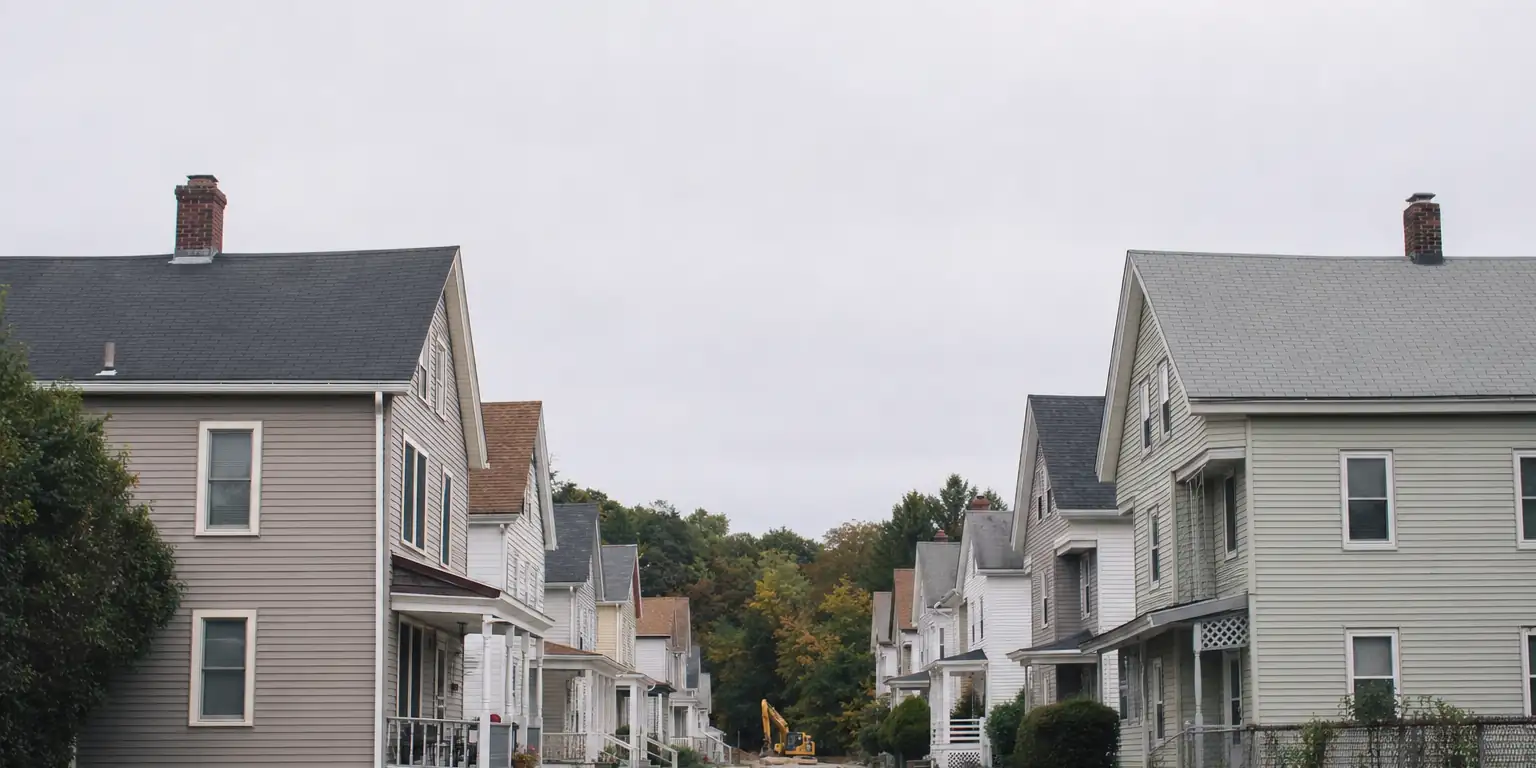
Jewett City was chartered as a borough in 1895 — one of only nine remaining incorporated boroughs in Connecticut. It has its own warden, its own board of burgesses, its own water system, and a sewer system tied into the regional treatment plant. About a square mile of tight 19th-century mill-village blocks at the confluence of the Pachaug and the Quinebaug.
Job profile in here looks nothing like the surrounding town: tight-lot foundation repair, sewer-lateral and water-line replacement on narrow streets, basement work in mill-era houses, careful utility trenching where the equipment can’t fit and the laterals are older than the laterals next to them.
Borough chartered
1895
Approx. area
~1 sq mi
Job mix
Lateral · foundation · trench
The borough has its own permit track for ROW work; the surrounding town runs septic through the Uncas Health District and building permits through Griswold. We coordinate both. Every Griswold quote starts with figuring out which side of the line your parcel sits on.
Excavation services we run in Griswold
Borough or town — every scope below runs in Griswold.
Septic & sewer
Foundations & structure
Drainage & water
Site, clearing & grading
Driveways, utilities & access
Frequently asked — Griswold
Five questions about working in Jewett City and the Pachaug catchment.
- Is Jewett City a separate utility from Griswold?
- Yes — and it splits by service. The Jewett City Department of Public Utilities (JCDPU) runs electric and sewer for the borough plus limited surrounding areas, while water inside the borough comes from the Jewett City Water Company, a separate private utility. Outside the borough boundary, most of Griswold is on private well and septic. We check service-area maps before quoting any below-grade work in or near Jewett City to confirm which utility owns the lateral.
- Can you do tight-access work in Jewett City's mill-village blocks?
- Yes — mini-excavator scale work in tight-access driveways and side-yards is regular Griswold work. Old rubble-stone foundations, narrow setbacks, and aging sewer laterals make up most of the borough work. We size the equipment to the access, not the other way around.
- What's Pachaug Pond shoreline excavation like?
- Pond and reservoir shoreline excavation is regulated by CT DEEP, not just the town. Anything within the regulated tidal/upland area near Pachaug needs DEEP inland wetlands review and sometimes a structural permit. Riprap, dock pads, and bank stabilization are doable but the permits drive the timeline.
- Are there wetlands restrictions around the Pachaug system?
- Yes. The Pachaug River and its tributaries crisscross Griswold, and the town's Inland Wetlands & Watercourses Commission reviews anything within 100 feet of regulated wetlands. Pachaug State Forest borders also add DEEP review for adjacent parcels. We pull the wetlands review before quoting anything in the Pachaug catchment.
- Do you handle septic-to-sewer conversions in the borough?
- Yes — when Jewett City extends a sewer main, we handle the lateral tie-in, the old tank abandonment (pump-out, crush, and backfill per code), and the yard restoration. The borough utility issues the connection permit; we coordinate the inspection. Older properties on the edge of the service area often have the option to convert.
Inside the borough or outside it — we’ll meet you on the lot.
Also in GriswoldUnderground utilities Demolition