
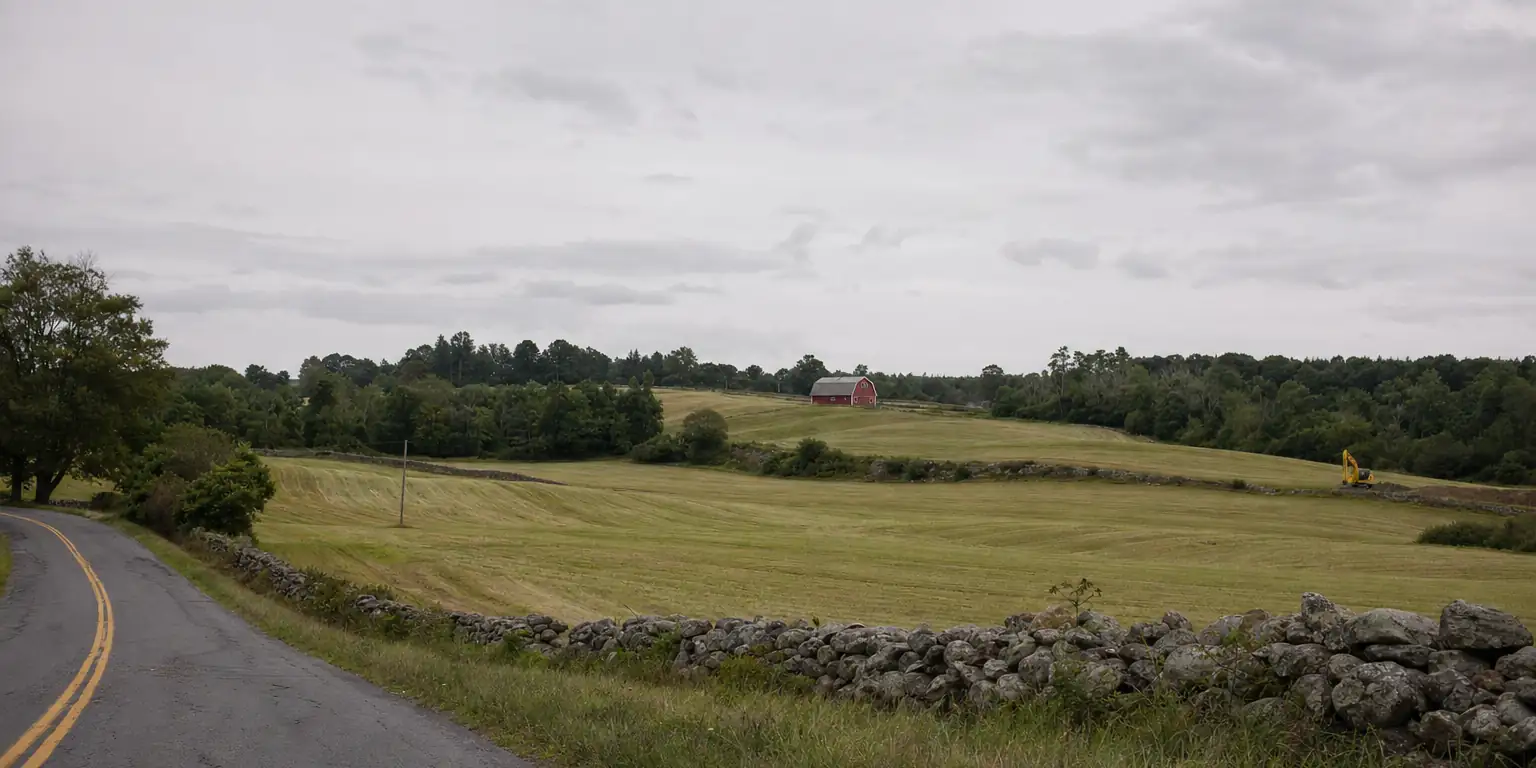
Canterbury, CT
A small, quiet town. Worked the way it asks to be worked.
Canterbury covers about 40 square miles and houses fewer than 5,000 people. The town green still anchors it. Stone walls run along most property lines, older than the houses they border. The Quinebaug River forms the western edge; the rest is glacial-till uplands and farm parcels. There is no public sewer here. There is barely a downtown. We’ve worked on foundations, septic systems, and drainage in this town for two decades, and the right way to show up is the same as it’s ever been: quiet, small, and ready to listen to the lot.
— 01 —
Work small.
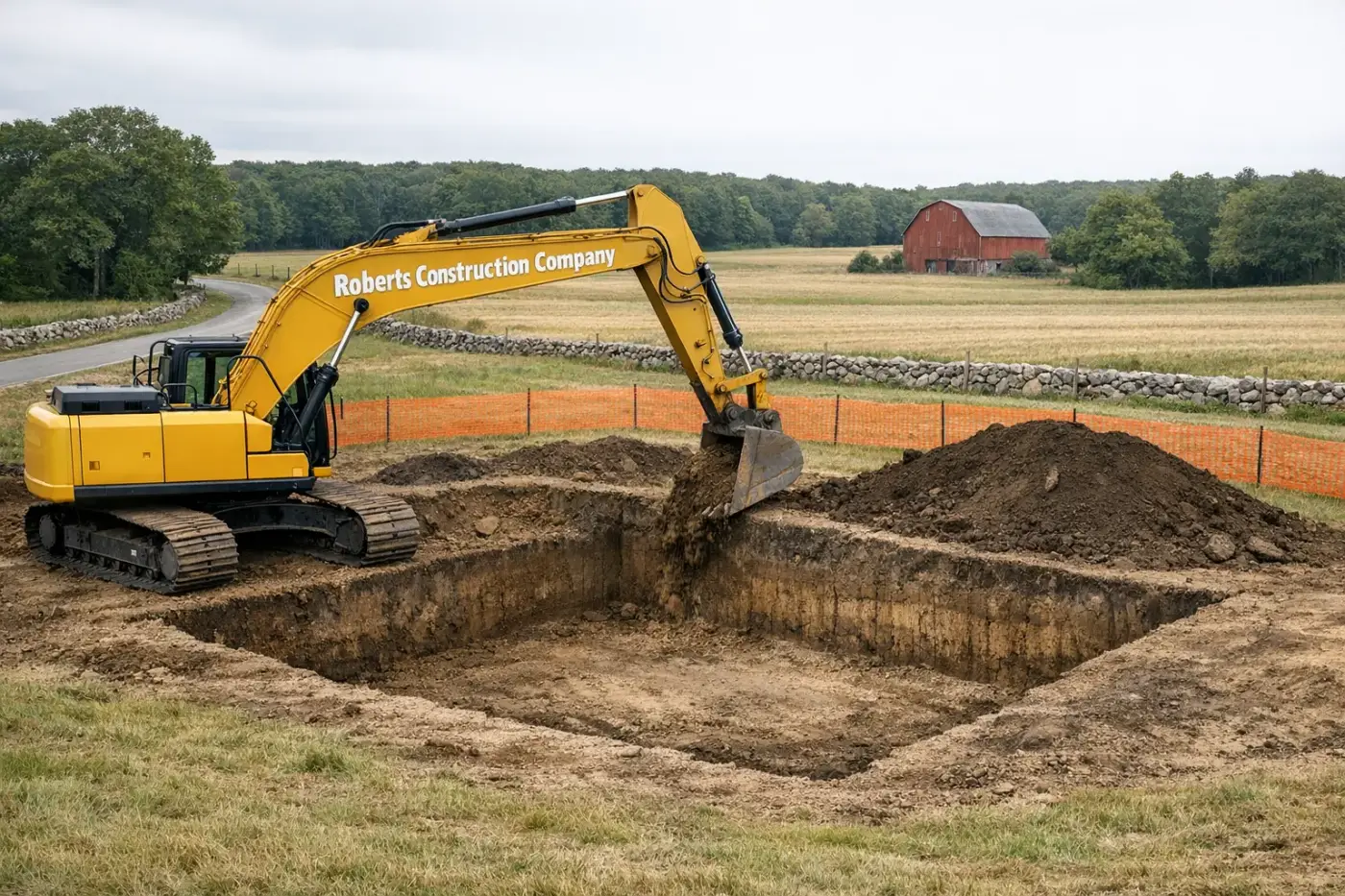
Canterbury parcels are residential and agricultural — not commercial. We bring the size of equipment the lot needs and not a step bigger. The town doesn’t reward overkill; it just makes the day longer.
— 02 —
Respect the stonework.
Stone walls run along most Canterbury property lines. They’re older than the houses, and they’re not in the way — they’re the survey. Foundations, driveways, and fields all get planned around them. We don’t move walls. We work the gaps that already exist.
— 03 —
Septic is the state-edge case.
Canterbury permits septic through the Northeast District Department of Health. Lots are big enough that siting an OWTS isn’t usually the constraint — what is, is matching it to the well location and the wetland buffers. We get the design right first, then dig.
— 04 —
The river is a quiet edge.
The Quinebaug forms Canterbury’s western border. Most lots aren’t on it; the few that are need drainage and sometimes flood-mapping awareness. We pull the FIRMs on river-adjacent parcels, even when the owner thinks they’re too far back to matter.
Excavation services we run in Canterbury
Quietly, on Canterbury lots — every scope below.
Septic & sewer
Foundations & structure
Drainage & water
Site, clearing & grading
Driveways, utilities & access
Frequently asked — Canterbury
What we get asked before working Canterbury's wetland-laced back roads.
- Why are Canterbury lots so wetland-restricted?
- Canterbury's terrain is laced with small streams feeding the Quinebaug and the Little River, and the soils favor seasonal high water tables. The Canterbury Inland Wetlands & Watercourses Commission catches a lot of mid-lot parcels that look dry but sit within the 100-foot upland review area. We pull a wetlands review before quoting.
- Is there a different process for Route 169 byway frontage?
- Yes — Route 169 is a National Scenic Byway and the town treats frontage work more carefully. Stone walls along the byway are protected. Clearing along the corridor needs to stop at the property line. CT DOT handles anything in the road right-of-way; everything off the right-of-way is Canterbury P&Z.
- What's the cost difference between a perc-failing and perc-passing Canterbury lot?
- A passing perc gives you a conventional gravity OWTS — predictable cost. A failing perc can require an engineered alternative (mound, pressure-distribution, or advanced treatment) which adds engineering fees plus 30–70% to the install cost depending on system type. We always do a soil test before quoting septic on an unbuilt Canterbury lot.
- Will my Canterbury driveway need a culvert permit?
- If the drive crosses a regulated watercourse or seasonal drainage, yes — Canterbury Inland Wetlands reviews the crossing. Larger culverts (24-inch and up) and any work in a town right-of-way need a Selectman's office driveway permit as well. We coordinate both permits as part of the access-drive work.
- Are foundations here on till or sand?
- Mostly glacial till with sand overlay near the rivers. The till is strong bearing once you're past topsoil; the surprise is intermittent ledge and large erratics that drive the rock-removal contingency. Bottomland near the Little River runs softer silts — those parcels need test-pits and sometimes engineered footings.
Walk us through your Canterbury lot. We’ll know what to do with it.
Roberts Construction · Sterling, CT · 15 minutes from Canterbury Green
Also in CanterburyUnderground utilities Demolition