- Do I need an asbestos survey before demolition in Killingly?
- Assume yes for anything built before the 1980s — which in Killingly is most of the candidates. Connecticut DPH rules require licensed abatement contractors for asbestos work beyond very small quantities (more than 3 linear or 3 square feet), with DPH notification once the disturbance passes 10 linear or 25 square feet. The survey happens before permitting, the abatement happens before the machine arrives, and the paperwork rides in the job file.
- Who issues the demolition permit?
- Killingly's Building Safety and Inspections office, which enforces the Connecticut State Building Code. Under the town's ordinances a demolition permit runs thirty days, and if the takedown affects traffic on a borough street the town can require traffic control at the permit holder's cost — worth knowing before you schedule a Main Street job. The building office can be reached at (860) 779-5315.
- What happens with the utilities before a Danielson teardown?
- Everything gets formally disconnected and documented first: the sewer lateral cut and capped in coordination with the Killingly WPCA, water service killed at the curb with Connecticut Water, and electric and gas released by the energy utilities. In the borough those lines are old and close together, so we treat disconnect verification as part of the demolition, not someone else's errand.
- Where does the debris actually go?
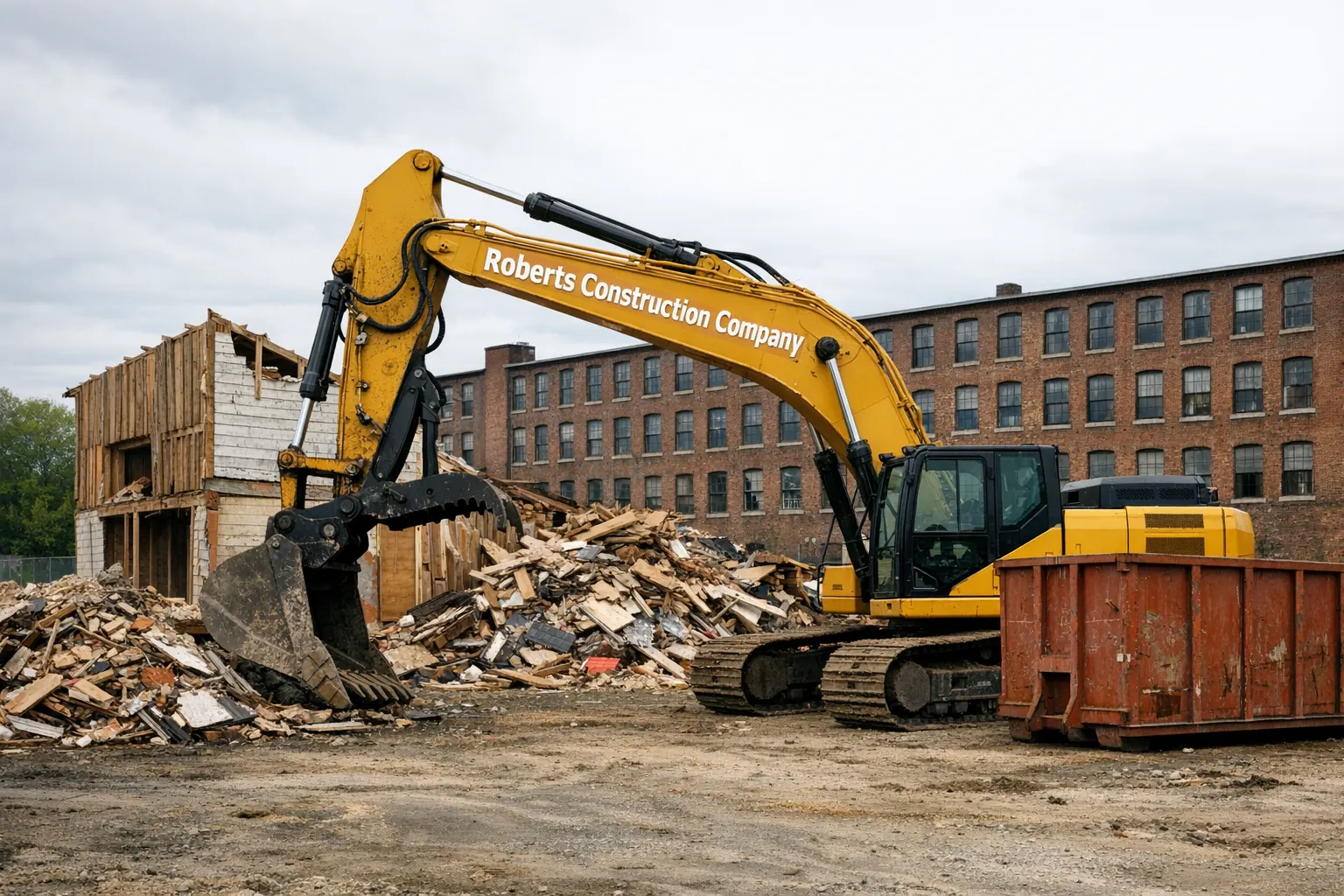
- Sorted and hauled to licensed facilities — steel and clean concrete separated for recycling, wood and mixed C&D containerized for a permitted transfer station. Killingly has commercial transfer capacity in town, which keeps trucking short. The town's own Transfer & Recycling Center on Brickhouse Road is a resident-sticker facility for household quantities, not a contractor outlet, so demo volume rides in our containers on our manifests.
- Can you take down tall or partial structures — like a mill annex?
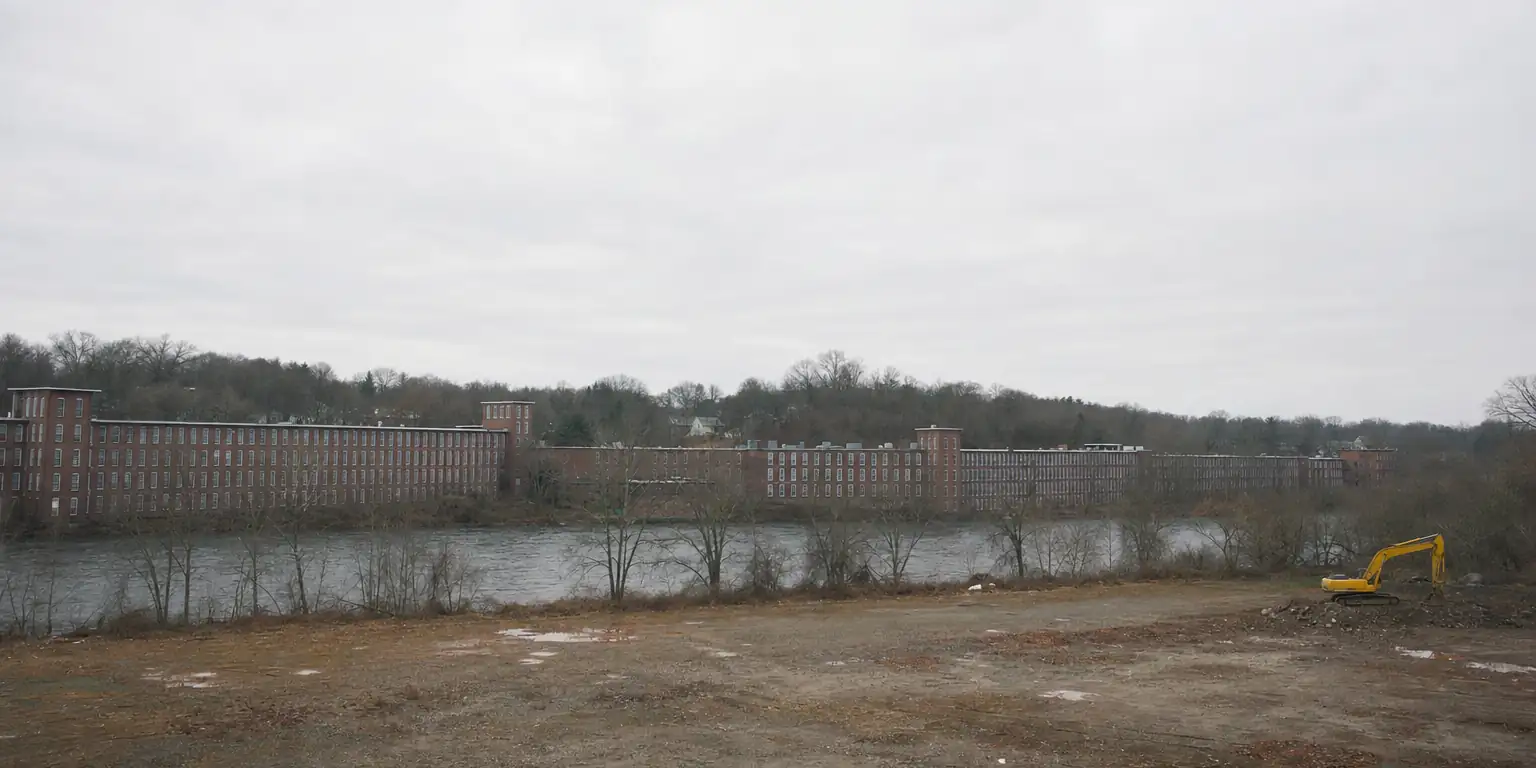
- Yes. Connecticut licenses demolition contractors through the Department of Administrative Services: Class B covers structures up to two and a half stories or 35 feet, Class A covers anything taller — which matters on mill properties. Selective work, where one attached outbuilding comes down and the main block stays, is planned around what remains: saw-cut separations, weather-sealing the exposed wall, and machine work staged so nothing leans the wrong way.
- Do you clear the site after the building is gone?
- That's the point of most Killingly teardowns — the lot has a next life. We pull the foundation, remove stumps and overgrowth, backfill with compacted structural fill if a new building is coming, and grade for drainage if it's staying open land. You get a buildable or mowable site, not a scar.