- What does a demolition permit involve in Scituate?
- The permit comes from the Scituate Building Official, and town code allows the official to require a performance guarantee to make sure the demolition — including site cleanup and stabilization — is actually finished. Before the town issues that permit, Rhode Island requires the asbestos question answered: a licensed inspection, and if regulated material is found, a RIDOH-approved abatement plan. We sequence all of it so the permit is ready when the machine is.
- Do older Scituate houses really need asbestos abatement before teardown?
- They need an inspection; abatement depends on what it finds. Scituate’s housing stock skews old — farmhouses, mill-village homes in Hope and Clayville — and pre-1980 buildings routinely carry asbestos in siding shingles, pipe insulation, and floor tile. If regulated material is present, a licensed abatement contractor removes it under a RIDOH-approved plan before we demolish. Knocking it down with the asbestos inside is illegal in every town, and doubly unwise in a drinking-water watershed.
- Can demolition debris be buried or burned on site?
- No. Burying construction and demolition debris on a Scituate lot is prohibited, and open burning of demolition material is not allowed. Everything leaves the site — sorted where practical, hauled to a RIDEM-licensed C&D processing facility or the Central Landfill in Johnston. In the watershed, an old buried debris pile is also a real liability at resale, because it eventually shows up in someone’s test pit.
- What happens to the well and septic system when a house comes down?
- They get decommissioned deliberately, not ignored. The OWTS tank is pumped by a licensed hauler, then crushed or filled per RIDEM guidance; the well is either preserved for the next build or properly capped. In the watershed, an abandoned tank left full is exactly the kind of slow contamination source Providence Water oversight exists to prevent — so we close these out as part of the demolition scope, not as an afterthought.
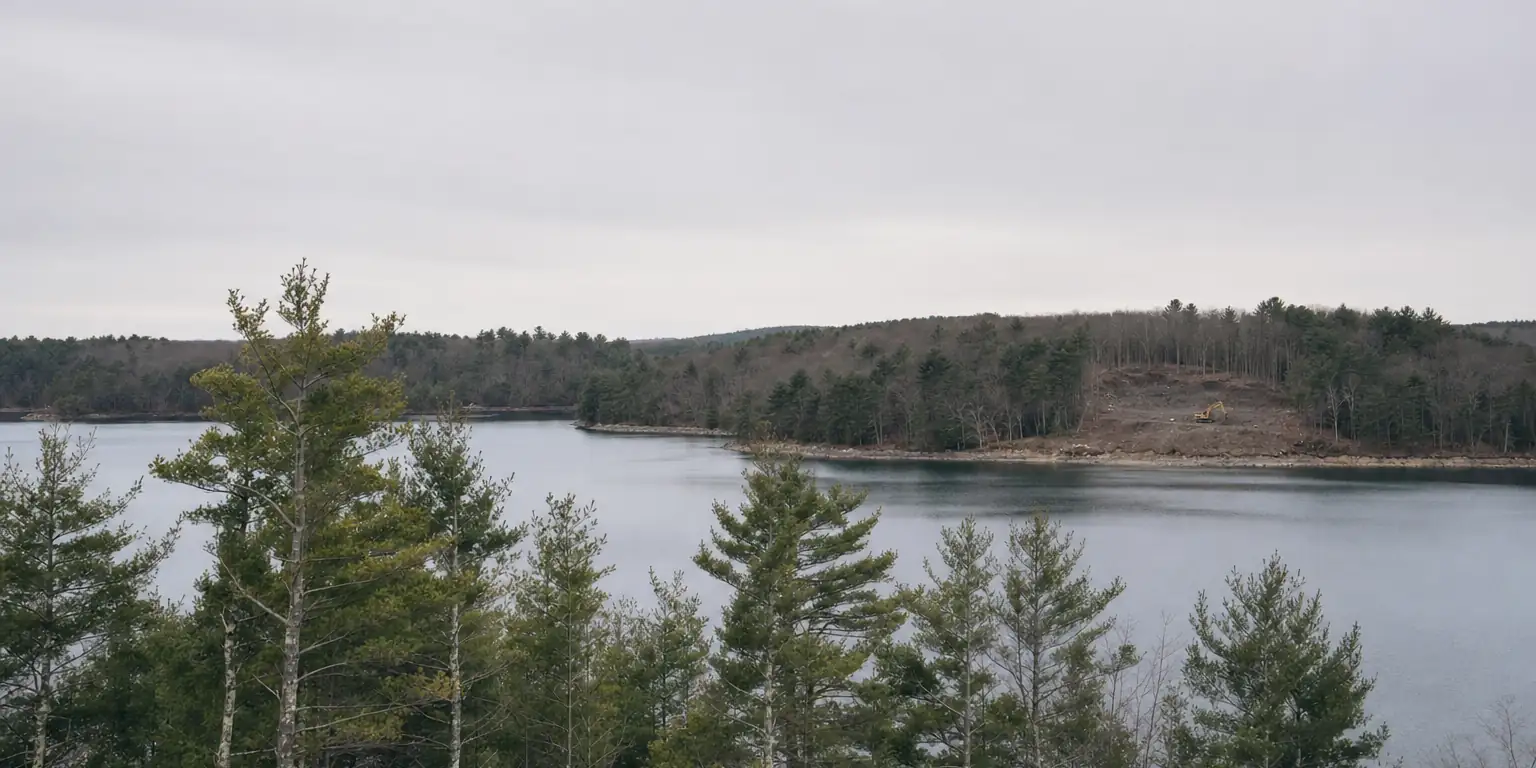
- Does the reservoir watershed make demolition more expensive?
- Modestly, and mostly in controls rather than machine time. Silt fence, a stabilized construction entrance, contained concrete washout, and final stabilization are line items we’d run on any careful job — the watershed makes them non-negotiable and slightly heavier. The teardown itself prices like anywhere else in western Rhode Island. Where budgets actually move is abatement, and that depends on the building, not the watershed.
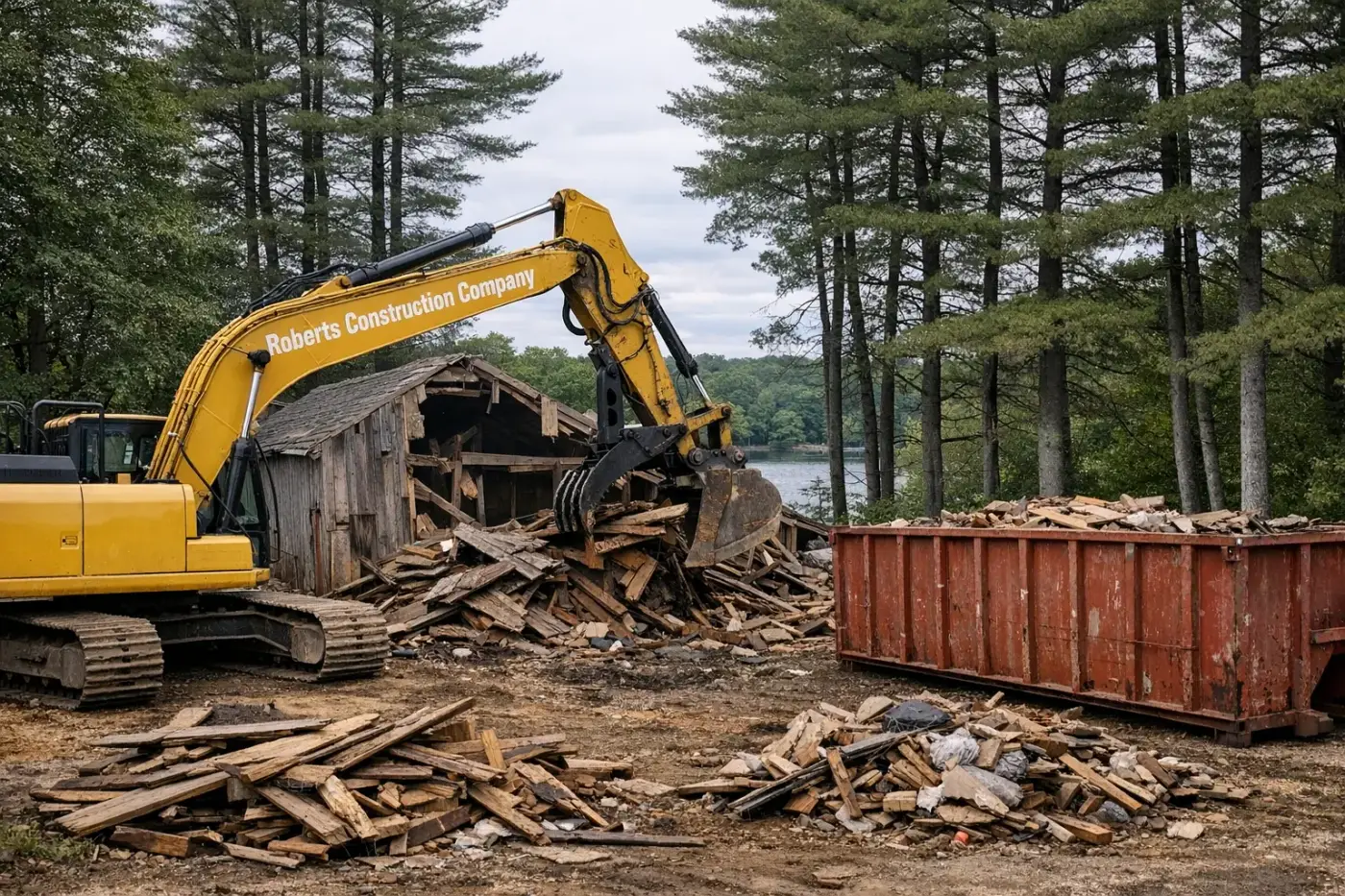
- Do you take down barns and outbuildings, not just houses?
- Yes — barns, garages, sheds, mobile homes, and fire-damaged structures. Old agricultural buildings get the same pre-demo screening, because barns hide surprises: buried fuel tanks from tractor days, transite (asbestos-cement) roofing, and lead paint on every board. Salvageable timber can be set aside if you want it; the rest is sorted and hauled like any other scope.